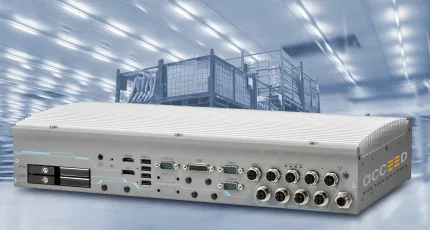
SUCHEN SIE DIE PASSENDE

INDUSTRIELLE LÖSUNG?

Entdecken Sie Embedded-, Kommunikations- und Automatisierungslösungen für Ihre Anwendung.

SETPt100/1625

Pt100 Keramikröhrchen 1,6mm*25mm
13,00 EUR

inkl. Umsatzsteuer 15,47 EUR

  • Hersteller nicht angegeben
  • Kategorie: Pt 100 Sensors RTD
  • The SETPt100/1625 is a precision temperature sensing element built around a platinum resistance thermometer (RTD) encapsulated in a ceramic tube. Designed according to the DIN IEC 751 standard, this sensor provides stable, repeatable, and accurate temperature measurement for industrial, laboratory, and instrumentation applications. The model designation “1625” refers to its physical dimensions—1.6 mm diameter and 25 mm length—making it a compact and versatile sensing element suitable for integration into probes, assemblies, and measurement systems requiring high accuracy and thermal stability.
- Platinum Resistance Element (Pt100): Utilizes a platinum sensing element with a nominal resistance of 100 Ω at 0 °C, ensuring high accuracy and repeatability.
- Ceramic Tube Encapsulation: The sensing element is housed in a high-purity ceramic tube that provides excellent electrical insulation, mechanical protection, and thermal stability.
- Precision Class B Accuracy: Conforms to Class B tolerance as defined by DIN IEC 751 (now IEC 60751), offering a temperature accuracy of ±(0.3 + 0.005|t|) °C.
- Compact Form Factor: With a diameter of 1.6 mm and a length of 25 mm, the sensor is ideal for integration into narrow or confined spaces.
- High Thermal Stability: Ceramic encapsulation ensures minimal drift and stable performance over a wide temperature range.
- Standardized Design: Fully compliant with DIN IEC 751, ensuring interchangeability and compatibility with standard Pt100 measurement circuits and instrumentation.
- Versatile Application Range: Suitable for use in industrial process control, laboratory instrumentation, HVAC systems, and precision temperature monitoring.
- Robust Construction: Resistant to mechanical stress, vibration, and thermal cycling, ensuring long operational life.
1. Product Overview
Product Name: Pt100 Ceramic Tube Temperature Sensor
Model: SETPt100/1625
Series: Pt100 Ceramic Resistance Temperature Detectors (RTD)
Article Number: SETPt100/1625
Manufacturer: [Not explicitly stated in source; typically produced by industrial sensor manufacturers specializing in temperature measurement components]

The SETPt100/1625 is a precision temperature sensing element built around a platinum resistance thermometer (RTD) encapsulated in a ceramic tube. Designed according to the DIN IEC 751 standard, this sensor provides stable, repeatable, and accurate temperature measurement for industrial, laboratory, and instrumentation applications. The model designation “1625” refers to its physical dimensions—1.6 mm diameter and 25 mm length—making it a compact and versatile sensing element suitable for integration into probes, assemblies, and measurement systems requiring high accuracy and thermal stability.


2. Key Features
- Platinum Resistance Element (Pt100): Utilizes a platinum sensing element with a nominal resistance of 100 Ω at 0 °C, ensuring high accuracy and repeatability.
- Ceramic Tube Encapsulation: The sensing element is housed in a high-purity ceramic tube that provides excellent electrical insulation, mechanical protection, and thermal stability.
- Precision Class B Accuracy: Conforms to Class B tolerance as defined by DIN IEC 751 (now IEC 60751), offering a temperature accuracy of ±(0.3 + 0.005|t|) °C.
- Compact Form Factor: With a diameter of 1.6 mm and a length of 25 mm, the sensor is ideal for integration into narrow or confined spaces.
- High Thermal Stability: Ceramic encapsulation ensures minimal drift and stable performance over a wide temperature range.
- Standardized Design: Fully compliant with DIN IEC 751, ensuring interchangeability and compatibility with standard Pt100 measurement circuits and instrumentation.
- Versatile Application Range: Suitable for use in industrial process control, laboratory instrumentation, HVAC systems, and precision temperature monitoring.
- Robust Construction: Resistant to mechanical stress, vibration, and thermal cycling, ensuring long operational life.


3. Technical Specifications
- Sensor Type: Resistance Temperature Detector (RTD)
- Element Type: Pt100 (Platinum, 100 Ω at 0 °C)
- Accuracy Class: Class B (DIN IEC 751 / IEC 60751)
- Nominal Resistance (R₀): 100 Ω ±0.12 Ω at 0 °C
- Temperature Coefficient (α): 0.00385 Ω/Ω/°C
- Temperature Range: Typically -200 °C to +600 °C (depending on installation and lead configuration)
- Construction: Ceramic tube encapsulated platinum element
- Tube Material: High-purity alumina ceramic (Al₂O₃)
- Tube Outer Diameter: 1.6 mm
- Tube Length: 25 mm
- Lead Configuration: Typically 2-wire, 3-wire, or 4-wire (depending on assembly; base element may be 2-wire)
- Lead Material: Platinum or nickel-coated copper (varies by manufacturer)
- Insulation Resistance: >100 MΩ at 100 VDC (at room temperature)
- Response Time: Dependent on installation; typically <1 s in liquid media when properly mounted
- Weight: Approx. 0.5–1 g (depending on lead configuration)
- Thermal Time Constant: Approx. 0.3–1.0 s (in water, 0.4 m/s flow)
- Self-Heating Coefficient: ≤0.4 K/mW at 0 °C
- Mechanical Strength: High resistance to vibration and thermal shock due to ceramic encapsulation


4. Functionality
The SETPt100/1625 operates on the principle of the temperature-dependent resistance of platinum. As temperature increases, the electrical resistance of the platinum element rises in a predictable and linear manner. This resistance change is measured by a connected instrument (such as a temperature transmitter, controller, or data acquisition system) and converted into a temperature reading.

Use Cases and Applications:
- Industrial Process Monitoring: Integration into thermowells or protective sheaths for process temperature measurement in chemical, petrochemical, and food industries.
- Laboratory Equipment: Used in precision temperature baths, calibration systems, and scientific instruments requiring stable and accurate temperature sensing.
- HVAC and Building Automation: Embedded in air ducts, heat exchangers, or environmental monitoring systems.
- OEM Integration: Suitable for incorporation into custom temperature probes, sensors, or assemblies for machinery and equipment.
- Calibration Standards: Serves as a reference element in calibration setups due to its predictable resistance-temperature relationship.

Compatibility:
- Compatible with all standard Pt100 measurement circuits and devices conforming to IEC 60751.
- Can be connected to 2-, 3-, or 4-wire measurement systems depending on desired accuracy and wiring configuration.
- Works with analog and digital transmitters, PLC input modules, and temperature controllers supporting Pt100 inputs.


5. Components & Accessories
Included Components:
- Pt100 sensing element encapsulated in ceramic tube (1.6 mm × 25 mm)
- Attached lead wires (length and type may vary depending on configuration)

Optional Accessories:
- Protective Sheaths: Stainless steel or Inconel tubes for harsh environments.
- Connection Heads: Terminal heads or miniature connectors for wiring integration.
- Extension Cables: Shielded cables for long-distance signal transmission.
- Mounting Hardware: Compression fittings, adapters, or thermowells for installation in process lines.
- Signal Conditioning Modules: Temperature transmitters for converting resistance to standard analog or digital signals (e.g., 4–20 mA, Modbus).

Connectors:
- Bare wire ends for direct soldering or crimping.
- Optional miniature RTD connectors (IEC or ANSI standard).


6. Installation & Setup
Requirements:
- Compatible measurement circuit capable of reading Pt100 resistance values.
- Proper mechanical support or housing to protect the ceramic element from mechanical stress.
- Electrical insulation and shielding to minimize noise and interference.

Mounting Options:
- Can be inserted into a protective metal sheath or thermowell for process applications.
- May be embedded directly into equipment or surfaces for temperature monitoring.
- Suitable for integration into sensor assemblies with epoxy or ceramic bonding materials.

Configuration:
- 2-Wire Connection: Simplest configuration; includes inherent lead resistance error.
- 3-Wire Connection: Compensates for lead resistance in balanced circuits.
- 4-Wire Connection: Provides highest accuracy by eliminating lead resistance effects.

Setup Procedure:
1. Verify sensor integrity and resistance at 0 °C (should read approximately 100 Ω).
2. Connect leads according to measurement system configuration (2-, 3-, or 4-wire).
3. Mount sensor securely in desired location ensuring good thermal contact.
4. Calibrate measurement system if required to ensure accuracy.
5. Avoid excessive mechanical stress or bending of the ceramic tube during installation.


7. Performance & Capabilities
Speed:
- Fast thermal response due to small mass and ceramic encapsulation.
- Typical response time <1 second in liquid media.

Capacity:
- Suitable for continuous operation across wide temperature ranges (-200 °C to +600 °C).
- Can handle rapid temperature fluctuations without significant drift.

Efficiency:
- High measurement precision with minimal self-heating.
- Excellent long-term stability and repeatability.

Limitations:
- Ceramic tube is brittle; requires careful handling to prevent breakage.
- Not suitable for direct use in high-vibration or high-pressure environments without protective housing.
- Limited mechanical flexibility; should be installed in fixed, stable positions.

Performance Highlights:
- Accuracy: ±(0.3 + 0.005|t|) °C (Class B)
- Stability: Drift <0.05 °C/year under normal operating conditions
- Repeatability: ±0.05 °C typical
- Linearity: Excellent linear response over full temperature range


8. Standards & Compliance
- DIN IEC 751 / IEC 60751: Defines the resistance-temperature relationship and tolerance classes for platinum RTDs.
- Class B Tolerance: ±(0.3 + 0.005|t|) °C accuracy specification.
- RoHS Compliance: Typically compliant with EU Directive 2011/65/EU (Restriction of Hazardous Substances).
- REACH Compliance: Manufactured in accordance with European chemical safety regulations.
- Quality Standards: Produced under ISO 9001 certified quality management systems (depending on manufacturer).
- Electrical Safety: Meets insulation and dielectric strength requirements for low-voltage instrumentation.


9. Additional Information
Warranty:
- Standard manufacturer warranty typically covers defects in materials and workmanship for 12 months from date of purchase (may vary by supplier).

Support:
- Technical documentation, wiring diagrams, and calibration data available upon request.
- Application engineering support for integration into custom assemblies or systems.

Maintenance:
- Virtually maintenance-free under normal operating conditions.
- Periodic calibration recommended for critical measurement applications.
- Avoid mechanical shock or contamination of the ceramic surface.

Updates & Customization:
- Available in alternative dimensions (e.g., 2 mm × 30 mm, 3 mm × 50 mm) upon request.
- Custom lead lengths, wire materials, and tolerance classes (A, 1/3B, 1/10B) available.
- Can be supplied as part of complete temperature probe assemblies with connectors or transmitters.


Summary
The SETPt100/1625 Pt100 Ceramic Tube Temperature Sensor is a precision platinum resistance element designed for accurate and stable temperature measurement across a wide range of industrial and laboratory applications. Encapsulated in a 1.6 mm × 25 mm ceramic tube, it offers excellent thermal stability, electrical insulation, and mechanical protection. Conforming to DIN IEC 751 (IEC 60751) Class B standards, it ensures reliable performance, interchangeability, and compatibility with standard Pt100 measurement systems. Its compact size, robust construction, and high accuracy make it an ideal choice for OEM integration, process monitoring, and precision instrumentation where dependable temperature sensing is essential.

Keine Manuals/Kataloge verfügbar.

Kein Zubehör vorhanden.