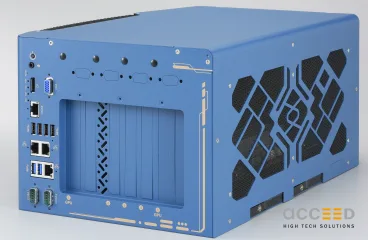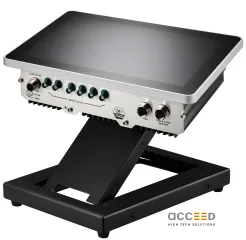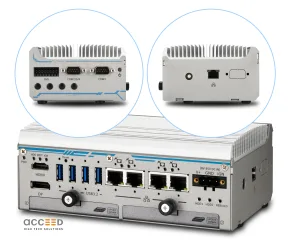
SUCHEN SIE DIE PASSENDE
INDUSTRIELLE LÖSUNG?
Entdecken Sie Embedded-, Kommunikations- und Automatisierungslösungen für Ihre Anwendung.
SETPt100/2815
Pt100 Keramikröhrchen 2,8mm*15mm
13,00 EUR
inkl. Umsatzsteuer 15,47 EUR
- Platinum Resistance Element (Pt100): Utilizes a platinum sensing element with a nominal resistance of 100 Ω at 0 °C, ensuring high accuracy and repeatability.
- Ceramic Tube Encapsulation: The sensing element is embedded in a ceramic tube with a 2.8 mm outer diameter and 15 mm length, providing excellent thermal stability and electrical insulation.
- Accuracy Class B (DIN IEC 751): Offers a defined tolerance of ±(0.3 °C + 0.005 × |t|), suitable for general-purpose industrial and laboratory applications.
- High Temperature Stability: Ceramic encapsulation allows operation in elevated temperature environments without degradation of measurement accuracy.
- Compact Form Factor: The small cylindrical design (2.8 × 15 mm) enables integration into compact probes, assemblies, or embedded measurement systems.
- Standardized Resistance Curve: Conforms to the IEC 60751 (formerly DIN IEC 751) temperature-resistance relationship, ensuring compatibility with standard Pt100 measurement circuits and controllers.
- Robust Construction: Ceramic housing protects the platinum element from mechanical stress, oxidation, and contamination.
- Versatile Integration: Suitable for use in thermowells, metal sheaths, or direct embedding in process sensors.
- Ceramic Tube Encapsulation: The sensing element is embedded in a ceramic tube with a 2.8 mm outer diameter and 15 mm length, providing excellent thermal stability and electrical insulation.
- Accuracy Class B (DIN IEC 751): Offers a defined tolerance of ±(0.3 °C + 0.005 × |t|), suitable for general-purpose industrial and laboratory applications.
- High Temperature Stability: Ceramic encapsulation allows operation in elevated temperature environments without degradation of measurement accuracy.
- Compact Form Factor: The small cylindrical design (2.8 × 15 mm) enables integration into compact probes, assemblies, or embedded measurement systems.
- Standardized Resistance Curve: Conforms to the IEC 60751 (formerly DIN IEC 751) temperature-resistance relationship, ensuring compatibility with standard Pt100 measurement circuits and controllers.
- Robust Construction: Ceramic housing protects the platinum element from mechanical stress, oxidation, and contamination.
- Versatile Integration: Suitable for use in thermowells, metal sheaths, or direct embedding in process sensors.
1. Product Overview
Product Name: Pt100 Ceramic Tube Sensor
Model: SETPt100/2815
Series: Pt100 Ceramic Resistance Temperature Detectors (RTD)
Article Number: SETPt100/2815
Manufacturer: [Not specified in source; typically produced by industrial sensor manufacturers specializing in temperature measurement components]
The SETPt100/2815 is a precision temperature sensing element designed for integration into industrial and laboratory temperature measurement systems. It features a platinum resistance element (Pt100) encapsulated within a high-grade ceramic tube, providing mechanical stability, electrical insulation, and thermal reliability. The component adheres to the DIN IEC 751 standard (now IEC 60751), ensuring standardized resistance-temperature characteristics and interchangeability across compatible measurement systems.
2. Key Features
- Platinum Resistance Element (Pt100): Utilizes a platinum sensing element with a nominal resistance of 100 Ω at 0 °C, ensuring high accuracy and repeatability.
- Ceramic Tube Encapsulation: The sensing element is embedded in a ceramic tube with a 2.8 mm outer diameter and 15 mm length, providing excellent thermal stability and electrical insulation.
- Accuracy Class B (DIN IEC 751): Offers a defined tolerance of ±(0.3 °C + 0.005 × |t|), suitable for general-purpose industrial and laboratory applications.
- High Temperature Stability: Ceramic encapsulation allows operation in elevated temperature environments without degradation of measurement accuracy.
- Compact Form Factor: The small cylindrical design (2.8 × 15 mm) enables integration into compact probes, assemblies, or embedded measurement systems.
- Standardized Resistance Curve: Conforms to the IEC 60751 (formerly DIN IEC 751) temperature-resistance relationship, ensuring compatibility with standard Pt100 measurement circuits and controllers.
- Robust Construction: Ceramic housing protects the platinum element from mechanical stress, oxidation, and contamination.
- Versatile Integration: Suitable for use in thermowells, metal sheaths, or direct embedding in process sensors.
3. Technical Specifications
| Parameter | Specification |
|------------|----------------|
| Model | SETPt100/2815 |
| Type | Resistance Temperature Detector (RTD) |
| Sensing Element | Platinum (Pt100) |
| Nominal Resistance (R₀) | 100 Ω at 0 °C |
| Temperature Coefficient (α) | 0.00385 Ω/Ω/°C (IEC 60751 standard) |
| Accuracy Class | Class B (DIN IEC 751) |
| Tolerance (Class B) | ±(0.3 °C + 0.005 × |t|) |
| Operating Temperature Range | Typically −50 °C to +500 °C (depending on assembly) |
| Encapsulation Material | Technical ceramic (alumina-based) |
| Outer Diameter | 2.8 mm |
| Length | 15 mm |
| Lead Configuration | Typically 2-wire or 4-wire (depending on assembly integration) |
| Electrical Insulation Resistance | >100 MΩ at 100 V DC (typical for ceramic encapsulated RTDs) |
| Thermal Response Time | Dependent on assembly; typically <1 s in liquid media when properly housed |
| Weight | Approx. 0.5–1 g (depending on lead configuration) |
| Standard Compliance | DIN IEC 751 / IEC 60751 |
| Mounting Orientation | Any |
| Environmental Protection | Determined by external housing; ceramic element itself is non-sealed |
4. Functionality
The SETPt100/2815 operates on the principle of the temperature-dependent electrical resistance of platinum. As temperature increases, the resistance of the platinum element rises in a predictable, nearly linear manner. The ceramic tube serves as both a mechanical support and an electrical insulator, ensuring that the platinum wire or thin-film element remains stable and isolated from external conductive materials.
Use Cases and Applications:
- Industrial Process Control: Integration into temperature probes for monitoring process fluids, gases, or surfaces.
- Laboratory Measurement Systems: Used in precision temperature calibration setups or reference sensors.
- HVAC and Environmental Monitoring: Embedded in air or surface temperature sensors for climate control systems.
- Automotive and Aerospace Testing: Suitable for component temperature monitoring in controlled environments.
- Scientific Instrumentation: Incorporated into analytical instruments requiring stable and accurate temperature feedback.
Compatibility:
The SETPt100/2815 is compatible with all standard Pt100 measurement circuits, including 2-wire, 3-wire, and 4-wire configurations, depending on the assembly. It can be connected to temperature transmitters, PLC input modules, digital thermometers, or data acquisition systems that support Pt100 RTDs per IEC 60751.
5. Components & Accessories
Included Components:
- Pt100 ceramic tube element (2.8 mm × 15 mm)
- Platinum sensing wire or thin-film element embedded within the ceramic body
Optional Accessories (depending on application):
- Connection Leads: Nickel, copper, or silver-plated wires for electrical connection.
- Protective Sheaths: Stainless steel or Inconel tubes for harsh environments.
- Thermowells: For process isolation and mechanical protection.
- Mounting Fittings: Compression fittings or threaded adapters for probe assembly.
- Signal Conditioning Modules: Temperature transmitters converting resistance to 4–20 mA or digital output.
Connectors:
The bare ceramic element typically requires soldering, welding, or crimping to extension leads. When integrated into a probe, standard connectors such as M12, LEMO, or miniature RTD connectors may be used.
6. Installation & Setup
Requirements:
- Compatible measurement circuit designed for Pt100 sensors (IEC 60751 standard).
- Proper mechanical housing or probe assembly to protect the ceramic element from mechanical stress and contamination.
- Electrical insulation between sensor leads and metallic housings.
Mounting Options:
- Embedded Installation: The ceramic element can be inserted into a metal sheath or thermowell and secured with high-temperature adhesive or ceramic cement.
- Direct Mounting: For laboratory use, it may be mounted directly in a controlled environment where mechanical protection is not critical.
- Probe Assembly Integration: Commonly used as the core sensing element in industrial RTD probes.
Configuration Steps:
1. Identify the required wiring configuration (2-, 3-, or 4-wire).
2. Connect the sensor leads to the measurement circuit, ensuring correct polarity and minimal lead resistance.
3. Calibrate the measurement system according to IEC 60751 resistance-temperature tables.
4. Verify insulation resistance and continuity before operation.
5. If installed in a sheath, ensure proper thermal contact between the ceramic element and the sheath tip.
7. Performance & Capabilities
Speed:
The thermal response time depends on the assembly configuration. When embedded in a thin-walled metal sheath and immersed in liquid, response times can be under one second.
Capacity & Range:
The Pt100 element provides accurate temperature measurement typically from −50 °C to +500 °C, with possible extension up to +600 °C depending on the ceramic and lead materials.
Efficiency:
Platinum RTDs are known for their linearity, repeatability, and long-term stability. The ceramic encapsulation minimizes drift due to mechanical or thermal stress.
Limitations:
- The bare ceramic element is fragile and should not be exposed to mechanical shock or vibration.
- Not suitable for direct immersion in liquids without protective housing.
- Electrical insulation may degrade if exposed to conductive contaminants or moisture.
Measurement Accuracy:
Class B tolerance ensures reliable performance for general industrial applications. For higher precision, Class A or 1/3 B variants may be available in the same form factor.
8. Standards & Compliance
- DIN IEC 751 / IEC 60751: Defines the resistance-temperature relationship and tolerance classes for platinum RTDs.
- Class B Accuracy: ±(0.3 °C + 0.005 × |t|) as per IEC 60751.
- RoHS Compliance: Ceramic and platinum materials are inherently compliant with RoHS directives (no hazardous substances).
- REACH Compliance: Materials used are typically REACH-compliant, containing no restricted substances.
- Quality Standards: Manufactured under ISO 9001 quality management systems (typical for industrial sensor components).
These standards ensure that the SETPt100/2815 can be integrated into regulated industrial systems and instrumentation without additional certification requirements.
9. Additional Information
Warranty:
Typically supplied with a standard manufacturer’s warranty covering material and manufacturing defects (duration varies by supplier, commonly 12–24 months).
Support:
Technical support is generally available from the manufacturer or distributor, including assistance with integration, calibration, and troubleshooting.
Maintenance:
- The ceramic element itself requires minimal maintenance.
- When used in a probe assembly, periodic calibration verification is recommended to ensure measurement accuracy.
- Avoid mechanical stress, contamination, or exposure to conductive dusts.
Updates & Variants:
The SETPt100/2815 may be part of a broader product family offering different dimensions (e.g., 2 mm × 10 mm, 3 mm × 20 mm) or accuracy classes (A, 1/3 B, 1/10 B). Custom configurations may include alternative lead materials, encapsulation types, or extended temperature ranges.
Typical Applications Summary:
- Industrial temperature probes and assemblies
- Laboratory calibration standards
- Embedded temperature sensing in machinery or instruments
- Environmental and HVAC monitoring systems
- Process automation and control
Comprehensive Summary:
The SETPt100/2815 Pt100 Ceramic Tube Sensor is a precision platinum resistance temperature detector designed for accurate, stable, and repeatable temperature measurement in industrial and laboratory environments. With a 2.8 mm diameter and 15 mm length, it offers a compact yet robust sensing solution. The ceramic encapsulation ensures excellent thermal and electrical insulation, while the Pt100 element provides standardized performance per DIN IEC 751 / IEC 60751.
Its Class B accuracy, wide operating range, and compatibility with standard RTD circuits make it a versatile component for integration into probes, transmitters, and measurement systems. The sensor’s mechanical stability, chemical inertness, and thermal reliability make it suitable for demanding applications where precision and durability are essential.
Overall, the SETPt100/2815 represents a reliable, standardized, and high-quality temperature sensing element optimized for integration into professional measurement and control systems.
Product Name: Pt100 Ceramic Tube Sensor
Model: SETPt100/2815
Series: Pt100 Ceramic Resistance Temperature Detectors (RTD)
Article Number: SETPt100/2815
Manufacturer: [Not specified in source; typically produced by industrial sensor manufacturers specializing in temperature measurement components]
The SETPt100/2815 is a precision temperature sensing element designed for integration into industrial and laboratory temperature measurement systems. It features a platinum resistance element (Pt100) encapsulated within a high-grade ceramic tube, providing mechanical stability, electrical insulation, and thermal reliability. The component adheres to the DIN IEC 751 standard (now IEC 60751), ensuring standardized resistance-temperature characteristics and interchangeability across compatible measurement systems.
2. Key Features
- Platinum Resistance Element (Pt100): Utilizes a platinum sensing element with a nominal resistance of 100 Ω at 0 °C, ensuring high accuracy and repeatability.
- Ceramic Tube Encapsulation: The sensing element is embedded in a ceramic tube with a 2.8 mm outer diameter and 15 mm length, providing excellent thermal stability and electrical insulation.
- Accuracy Class B (DIN IEC 751): Offers a defined tolerance of ±(0.3 °C + 0.005 × |t|), suitable for general-purpose industrial and laboratory applications.
- High Temperature Stability: Ceramic encapsulation allows operation in elevated temperature environments without degradation of measurement accuracy.
- Compact Form Factor: The small cylindrical design (2.8 × 15 mm) enables integration into compact probes, assemblies, or embedded measurement systems.
- Standardized Resistance Curve: Conforms to the IEC 60751 (formerly DIN IEC 751) temperature-resistance relationship, ensuring compatibility with standard Pt100 measurement circuits and controllers.
- Robust Construction: Ceramic housing protects the platinum element from mechanical stress, oxidation, and contamination.
- Versatile Integration: Suitable for use in thermowells, metal sheaths, or direct embedding in process sensors.
3. Technical Specifications
| Parameter | Specification |
|------------|----------------|
| Model | SETPt100/2815 |
| Type | Resistance Temperature Detector (RTD) |
| Sensing Element | Platinum (Pt100) |
| Nominal Resistance (R₀) | 100 Ω at 0 °C |
| Temperature Coefficient (α) | 0.00385 Ω/Ω/°C (IEC 60751 standard) |
| Accuracy Class | Class B (DIN IEC 751) |
| Tolerance (Class B) | ±(0.3 °C + 0.005 × |t|) |
| Operating Temperature Range | Typically −50 °C to +500 °C (depending on assembly) |
| Encapsulation Material | Technical ceramic (alumina-based) |
| Outer Diameter | 2.8 mm |
| Length | 15 mm |
| Lead Configuration | Typically 2-wire or 4-wire (depending on assembly integration) |
| Electrical Insulation Resistance | >100 MΩ at 100 V DC (typical for ceramic encapsulated RTDs) |
| Thermal Response Time | Dependent on assembly; typically <1 s in liquid media when properly housed |
| Weight | Approx. 0.5–1 g (depending on lead configuration) |
| Standard Compliance | DIN IEC 751 / IEC 60751 |
| Mounting Orientation | Any |
| Environmental Protection | Determined by external housing; ceramic element itself is non-sealed |
4. Functionality
The SETPt100/2815 operates on the principle of the temperature-dependent electrical resistance of platinum. As temperature increases, the resistance of the platinum element rises in a predictable, nearly linear manner. The ceramic tube serves as both a mechanical support and an electrical insulator, ensuring that the platinum wire or thin-film element remains stable and isolated from external conductive materials.
Use Cases and Applications:
- Industrial Process Control: Integration into temperature probes for monitoring process fluids, gases, or surfaces.
- Laboratory Measurement Systems: Used in precision temperature calibration setups or reference sensors.
- HVAC and Environmental Monitoring: Embedded in air or surface temperature sensors for climate control systems.
- Automotive and Aerospace Testing: Suitable for component temperature monitoring in controlled environments.
- Scientific Instrumentation: Incorporated into analytical instruments requiring stable and accurate temperature feedback.
Compatibility:
The SETPt100/2815 is compatible with all standard Pt100 measurement circuits, including 2-wire, 3-wire, and 4-wire configurations, depending on the assembly. It can be connected to temperature transmitters, PLC input modules, digital thermometers, or data acquisition systems that support Pt100 RTDs per IEC 60751.
5. Components & Accessories
Included Components:
- Pt100 ceramic tube element (2.8 mm × 15 mm)
- Platinum sensing wire or thin-film element embedded within the ceramic body
Optional Accessories (depending on application):
- Connection Leads: Nickel, copper, or silver-plated wires for electrical connection.
- Protective Sheaths: Stainless steel or Inconel tubes for harsh environments.
- Thermowells: For process isolation and mechanical protection.
- Mounting Fittings: Compression fittings or threaded adapters for probe assembly.
- Signal Conditioning Modules: Temperature transmitters converting resistance to 4–20 mA or digital output.
Connectors:
The bare ceramic element typically requires soldering, welding, or crimping to extension leads. When integrated into a probe, standard connectors such as M12, LEMO, or miniature RTD connectors may be used.
6. Installation & Setup
Requirements:
- Compatible measurement circuit designed for Pt100 sensors (IEC 60751 standard).
- Proper mechanical housing or probe assembly to protect the ceramic element from mechanical stress and contamination.
- Electrical insulation between sensor leads and metallic housings.
Mounting Options:
- Embedded Installation: The ceramic element can be inserted into a metal sheath or thermowell and secured with high-temperature adhesive or ceramic cement.
- Direct Mounting: For laboratory use, it may be mounted directly in a controlled environment where mechanical protection is not critical.
- Probe Assembly Integration: Commonly used as the core sensing element in industrial RTD probes.
Configuration Steps:
1. Identify the required wiring configuration (2-, 3-, or 4-wire).
2. Connect the sensor leads to the measurement circuit, ensuring correct polarity and minimal lead resistance.
3. Calibrate the measurement system according to IEC 60751 resistance-temperature tables.
4. Verify insulation resistance and continuity before operation.
5. If installed in a sheath, ensure proper thermal contact between the ceramic element and the sheath tip.
7. Performance & Capabilities
Speed:
The thermal response time depends on the assembly configuration. When embedded in a thin-walled metal sheath and immersed in liquid, response times can be under one second.
Capacity & Range:
The Pt100 element provides accurate temperature measurement typically from −50 °C to +500 °C, with possible extension up to +600 °C depending on the ceramic and lead materials.
Efficiency:
Platinum RTDs are known for their linearity, repeatability, and long-term stability. The ceramic encapsulation minimizes drift due to mechanical or thermal stress.
Limitations:
- The bare ceramic element is fragile and should not be exposed to mechanical shock or vibration.
- Not suitable for direct immersion in liquids without protective housing.
- Electrical insulation may degrade if exposed to conductive contaminants or moisture.
Measurement Accuracy:
Class B tolerance ensures reliable performance for general industrial applications. For higher precision, Class A or 1/3 B variants may be available in the same form factor.
8. Standards & Compliance
- DIN IEC 751 / IEC 60751: Defines the resistance-temperature relationship and tolerance classes for platinum RTDs.
- Class B Accuracy: ±(0.3 °C + 0.005 × |t|) as per IEC 60751.
- RoHS Compliance: Ceramic and platinum materials are inherently compliant with RoHS directives (no hazardous substances).
- REACH Compliance: Materials used are typically REACH-compliant, containing no restricted substances.
- Quality Standards: Manufactured under ISO 9001 quality management systems (typical for industrial sensor components).
These standards ensure that the SETPt100/2815 can be integrated into regulated industrial systems and instrumentation without additional certification requirements.
9. Additional Information
Warranty:
Typically supplied with a standard manufacturer’s warranty covering material and manufacturing defects (duration varies by supplier, commonly 12–24 months).
Support:
Technical support is generally available from the manufacturer or distributor, including assistance with integration, calibration, and troubleshooting.
Maintenance:
- The ceramic element itself requires minimal maintenance.
- When used in a probe assembly, periodic calibration verification is recommended to ensure measurement accuracy.
- Avoid mechanical stress, contamination, or exposure to conductive dusts.
Updates & Variants:
The SETPt100/2815 may be part of a broader product family offering different dimensions (e.g., 2 mm × 10 mm, 3 mm × 20 mm) or accuracy classes (A, 1/3 B, 1/10 B). Custom configurations may include alternative lead materials, encapsulation types, or extended temperature ranges.
Typical Applications Summary:
- Industrial temperature probes and assemblies
- Laboratory calibration standards
- Embedded temperature sensing in machinery or instruments
- Environmental and HVAC monitoring systems
- Process automation and control
Comprehensive Summary:
The SETPt100/2815 Pt100 Ceramic Tube Sensor is a precision platinum resistance temperature detector designed for accurate, stable, and repeatable temperature measurement in industrial and laboratory environments. With a 2.8 mm diameter and 15 mm length, it offers a compact yet robust sensing solution. The ceramic encapsulation ensures excellent thermal and electrical insulation, while the Pt100 element provides standardized performance per DIN IEC 751 / IEC 60751.
Its Class B accuracy, wide operating range, and compatibility with standard RTD circuits make it a versatile component for integration into probes, transmitters, and measurement systems. The sensor’s mechanical stability, chemical inertness, and thermal reliability make it suitable for demanding applications where precision and durability are essential.
Overall, the SETPt100/2815 represents a reliable, standardized, and high-quality temperature sensing element optimized for integration into professional measurement and control systems.
Keine Manuals/Kataloge verfügbar.
Kein Zubehör vorhanden.