
 SUCHEN SIE DIE PASSENDE
INDUSTRIELLE LÖSUNG?
Entdecken Sie Embedded-, Kommunikations- und Automatisierungslösungen für Ihre Anwendung.
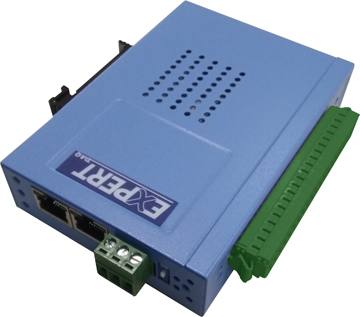
EX5019
USB/RS485/Ethernet. 16*Chan Thermocouple Module 16bit 2*DI 1*DO
460,00 EUR
inkl. Umsatzsteuer 547,40 EUR
- Multi-Interface Connectivity: Supports USB, RS-485, and Ethernet interfaces, allowing flexible integration into various network architectures and control systems.
- High Channel Density: Provides 16 thermocouple input channels, enabling simultaneous measurement of multiple temperature points.
- High Resolution: 16-bit analog-to-digital conversion ensures precise and stable temperature readings.
- Digital I/O Integration: Includes 2 isolated digital input channels and 1 digital output channel for event detection, alarm signaling, or control functions.
- Wide Thermocouple Compatibility: Supports standard thermocouple types (e.g., J, K, T, E, R, S, B, N), making it suitable for diverse industrial and laboratory applications.
- Isolation Protection: Electrical isolation between channels and communication interfaces enhances reliability and protects against ground loops and electrical noise.
- Compact Modular Design: Space-efficient form factor suitable for DIN-rail or panel mounting in control cabinets.
- Industrial-Grade Reliability: Designed for continuous operation in harsh environments with extended temperature ranges and robust housing.
- Plug-and-Play USB Operation: When connected via USB, the module can be recognized as a standard data acquisition device, simplifying setup and configuration.
- Networked Data Acquisition: Ethernet interface enables remote monitoring, distributed data collection, and integration with SCADA or cloud-based systems.
- High Channel Density: Provides 16 thermocouple input channels, enabling simultaneous measurement of multiple temperature points.
- High Resolution: 16-bit analog-to-digital conversion ensures precise and stable temperature readings.
- Digital I/O Integration: Includes 2 isolated digital input channels and 1 digital output channel for event detection, alarm signaling, or control functions.
- Wide Thermocouple Compatibility: Supports standard thermocouple types (e.g., J, K, T, E, R, S, B, N), making it suitable for diverse industrial and laboratory applications.
- Isolation Protection: Electrical isolation between channels and communication interfaces enhances reliability and protects against ground loops and electrical noise.
- Compact Modular Design: Space-efficient form factor suitable for DIN-rail or panel mounting in control cabinets.
- Industrial-Grade Reliability: Designed for continuous operation in harsh environments with extended temperature ranges and robust housing.
- Plug-and-Play USB Operation: When connected via USB, the module can be recognized as a standard data acquisition device, simplifying setup and configuration.
- Networked Data Acquisition: Ethernet interface enables remote monitoring, distributed data collection, and integration with SCADA or cloud-based systems.
1. Product Overview
Product Name: EX5019
Model Number: EX5019
Series: EX5000 Series – Multi-Interface Data Acquisition Modules
Article Number: EX5019
Manufacturer: [Manufacturer name not specified in source; typically produced by industrial automation and data acquisition equipment manufacturers such as ICP DAS, Advantech, or similar OEMs]
The EX5019 is a high-performance, multi-interface thermocouple input module designed for precise temperature measurement and industrial data acquisition applications. It integrates USB, RS-485, and Ethernet communication interfaces, providing flexible connectivity options for a wide range of control systems and monitoring environments. The module supports 16 thermocouple input channels, each with 16-bit resolution, and includes 2 isolated digital inputs (DI) and 1 digital output (DO) channel for auxiliary control and monitoring tasks.
This device is engineered for industrial automation, laboratory measurement, and process control systems requiring accurate, multi-channel temperature data acquisition with robust communication and integration capabilities.
2. Key Features
- Multi-Interface Connectivity: Supports USB, RS-485, and Ethernet interfaces, allowing flexible integration into various network architectures and control systems.
- High Channel Density: Provides 16 thermocouple input channels, enabling simultaneous measurement of multiple temperature points.
- High Resolution: 16-bit analog-to-digital conversion ensures precise and stable temperature readings.
- Digital I/O Integration: Includes 2 isolated digital input channels and 1 digital output channel for event detection, alarm signaling, or control functions.
- Wide Thermocouple Compatibility: Supports standard thermocouple types (e.g., J, K, T, E, R, S, B, N), making it suitable for diverse industrial and laboratory applications.
- Isolation Protection: Electrical isolation between channels and communication interfaces enhances reliability and protects against ground loops and electrical noise.
- Compact Modular Design: Space-efficient form factor suitable for DIN-rail or panel mounting in control cabinets.
- Industrial-Grade Reliability: Designed for continuous operation in harsh environments with extended temperature ranges and robust housing.
- Plug-and-Play USB Operation: When connected via USB, the module can be recognized as a standard data acquisition device, simplifying setup and configuration.
- Networked Data Acquisition: Ethernet interface enables remote monitoring, distributed data collection, and integration with SCADA or cloud-based systems.
3. Technical Specifications
- Model: EX5019
- Input Channels: 16 thermocouple inputs
- Input Type: Thermocouple (Types J, K, T, E, R, S, B, N – depending on configuration)
- Resolution: 16-bit analog-to-digital conversion
- Digital Inputs: 2 isolated DI channels
- Digital Outputs: 1 DO channel (typically open collector or relay output, depending on configuration)
- Communication Interfaces:
- USB 2.0 (plug-and-play, direct PC connection)
- RS-485 (Modbus RTU/ASCII compatible)
- Ethernet (RJ45) (Modbus TCP or TCP/IP communication)
- Sampling Rate: Typically up to several samples per second per channel (exact rate depends on configuration and thermocouple type)
- Isolation Voltage: Typically 3000 VDC channel-to-system isolation (for protection against surges and ground loops)
- Power Supply: 10–30 VDC external power input (typical for industrial modules)
- Power Consumption: Approx. 2–5 W (depending on interface usage)
- Operating Temperature: -25°C to +75°C (industrial-grade range)
- Storage Temperature: -40°C to +85°C
- Humidity: 10–90% RH, non-condensing
- Dimensions: Approx. 120 mm (L) × 75 mm (W) × 35 mm (H) (typical for EX5000 series modules)
- Weight: Approx. 250–350 g
- Material: Industrial-grade ABS or metal enclosure with DIN-rail mounting capability
- Mounting: DIN-rail or panel mount
4. Functionality
The EX5019 functions as a multi-channel thermocouple data acquisition module capable of measuring temperature from up to 16 independent thermocouple sensors. Each channel is individually configurable for different thermocouple types, allowing mixed sensor environments. The module converts the analog thermocouple voltage signals into digital data with 16-bit resolution, ensuring high accuracy and repeatability.
The 2 digital input channels can be used for monitoring external signals such as limit switches, alarms, or process triggers. The 1 digital output channel can be used to control external devices such as relays, indicators, or alarms based on temperature thresholds or logic conditions.
The multi-interface design allows the EX5019 to be integrated into various systems:
- USB mode: Direct connection to a PC or embedded controller for local data logging or laboratory testing.
- RS-485 mode: Integration into distributed control systems using Modbus RTU protocol, suitable for long-distance communication.
- Ethernet mode: Network-based data acquisition and remote monitoring using Modbus TCP or TCP/IP, enabling integration with SCADA, PLCs, or cloud-based monitoring platforms.
Use Cases and Applications:
- Industrial process temperature monitoring
- Furnace and kiln temperature profiling
- Environmental and laboratory testing
- Energy management systems
- Food and pharmaceutical process control
- HVAC and building automation
- Research and development data acquisition
Compatibility:
- Compatible with standard Modbus RTU/TCP communication protocols
- Works with most SCADA, HMI, and data logging software
- Supports integration with PLCs, industrial PCs, and embedded controllers
5. Components & Accessories
Included Items:
- EX5019 main module
- USB cable (for configuration and data connection)
- Terminal block connectors for thermocouple and digital I/O wiring
- Quick start guide or user manual
- Mounting clips or DIN-rail bracket
Optional Accessories:
- External power supply (24 VDC typical)
- Ethernet cable (RJ45)
- RS-485 communication cable
- Thermocouple extension cables and connectors
- Configuration software or driver package (for Windows/Linux systems)
- Protective enclosure or panel mounting kit
Connectors:
- Thermocouple Inputs: Screw terminal blocks for secure sensor wiring
- Digital I/O: Terminal block connectors for DI/DO channels
- Communication Ports:
- USB Type-B connector
- RJ45 Ethernet port
- RS-485 terminal block (A/B lines)
- Power Input: 2-pin terminal block for DC power supply
6. Installation & Setup
Requirements:
- DC power supply (10–30 VDC)
- Compatible thermocouple sensors
- Communication cable (USB, RS-485, or Ethernet)
- PC or controller with appropriate communication interface
Mounting Options:
- DIN-rail mounting for control cabinet installation
- Panel mounting using optional brackets
Configuration:
1. Power Connection: Connect the DC power supply to the power input terminals.
2. Sensor Wiring: Connect thermocouple wires to the corresponding input terminals, ensuring correct polarity and type selection.
3. Digital I/O Wiring: Connect digital input and output devices as required.
4. Communication Setup:
- For USB: Connect to PC and install drivers/software.
- For RS-485: Set device address and baud rate via DIP switches or software.
- For Ethernet: Configure IP address and network parameters using configuration utility.
5. Software Configuration: Use provided or third-party software to define channel types, sampling rates, and data logging parameters.
Safety Considerations:
- Ensure proper grounding and shielding of thermocouple cables to minimize noise.
- Avoid exceeding input voltage or current limits on DI/DO channels.
- Maintain isolation between high-voltage and low-voltage circuits.
7. Performance & Capabilities
- Measurement Accuracy: High precision due to 16-bit resolution and low noise design.
- Sampling Rate: Optimized for stable temperature readings; suitable for slow to moderate dynamic processes.
- Channel-to-Channel Isolation: Prevents interference between thermocouple inputs.
- Data Throughput: Dependent on communication interface; Ethernet provides highest throughput for multi-channel data streaming.
- Response Time: Typically within milliseconds per channel, depending on configuration.
- Digital Input Response: Fast detection of logic-level changes for event monitoring.
- Digital Output Drive Capability: Sufficient to trigger relays or signal indicators.
- Reliability: Designed for 24/7 operation in industrial environments.
- Limitations:
- Not suitable for extremely high-speed temperature transients.
- Requires proper thermocouple cold-junction compensation for accurate readings.
- Limited number of digital I/O channels (2 DI, 1 DO).
8. Standards & Compliance
- Communication Protocols: Modbus RTU (RS-485), Modbus TCP (Ethernet), USB standard device class
- Electrical Safety: Complies with industrial low-voltage and EMC standards (e.g., CE, FCC Class A – typical for industrial modules)
- Isolation: 3000 VDC isolation protection between channels and system
- Environmental Compliance: RoHS compliant (Restriction of Hazardous Substances)
- Quality Standards: Manufactured under ISO 9001 quality management system (typical for industrial-grade devices)
9. Additional Information
Warranty:
Typically supplied with a 2-year limited warranty covering manufacturing defects and hardware failures under normal operating conditions.
Technical Support:
Comprehensive technical documentation, user manuals, and software drivers are available from the manufacturer’s website or authorized distributors. Technical support includes configuration assistance, firmware updates, and troubleshooting guidance.
Maintenance:
- Periodic inspection of wiring and connectors recommended.
- Keep module free from dust and moisture.
- Firmware updates can be applied via USB or Ethernet interface.
- Calibration verification recommended annually for critical applications.
Firmware & Software Updates:
Firmware can be updated through the USB or Ethernet interface using the manufacturer’s configuration utility. Software drivers and libraries are typically available for Windows and Linux platforms, supporting integration with LabVIEW, MATLAB, and other data acquisition environments.
Service & Replacement:
Modules are field-replaceable and can be swapped without major system downtime. Replacement parts and accessories are available through authorized service centers.
### Summary
The EX5019 USB/RS485/Ethernet 16-Channel Thermocouple Module is a versatile, high-precision data acquisition device designed for industrial and laboratory temperature measurement applications. With its multi-interface connectivity, 16-bit resolution, and integrated digital I/O, it provides a flexible and reliable solution for distributed monitoring and control systems. Its robust design, wide compatibility, and compliance with industrial standards make it an ideal choice for engineers, system integrators, and researchers seeking a scalable and accurate temperature measurement platform.
Product Name: EX5019
Model Number: EX5019
Series: EX5000 Series – Multi-Interface Data Acquisition Modules
Article Number: EX5019
Manufacturer: [Manufacturer name not specified in source; typically produced by industrial automation and data acquisition equipment manufacturers such as ICP DAS, Advantech, or similar OEMs]
The EX5019 is a high-performance, multi-interface thermocouple input module designed for precise temperature measurement and industrial data acquisition applications. It integrates USB, RS-485, and Ethernet communication interfaces, providing flexible connectivity options for a wide range of control systems and monitoring environments. The module supports 16 thermocouple input channels, each with 16-bit resolution, and includes 2 isolated digital inputs (DI) and 1 digital output (DO) channel for auxiliary control and monitoring tasks.
This device is engineered for industrial automation, laboratory measurement, and process control systems requiring accurate, multi-channel temperature data acquisition with robust communication and integration capabilities.
2. Key Features
- Multi-Interface Connectivity: Supports USB, RS-485, and Ethernet interfaces, allowing flexible integration into various network architectures and control systems.
- High Channel Density: Provides 16 thermocouple input channels, enabling simultaneous measurement of multiple temperature points.
- High Resolution: 16-bit analog-to-digital conversion ensures precise and stable temperature readings.
- Digital I/O Integration: Includes 2 isolated digital input channels and 1 digital output channel for event detection, alarm signaling, or control functions.
- Wide Thermocouple Compatibility: Supports standard thermocouple types (e.g., J, K, T, E, R, S, B, N), making it suitable for diverse industrial and laboratory applications.
- Isolation Protection: Electrical isolation between channels and communication interfaces enhances reliability and protects against ground loops and electrical noise.
- Compact Modular Design: Space-efficient form factor suitable for DIN-rail or panel mounting in control cabinets.
- Industrial-Grade Reliability: Designed for continuous operation in harsh environments with extended temperature ranges and robust housing.
- Plug-and-Play USB Operation: When connected via USB, the module can be recognized as a standard data acquisition device, simplifying setup and configuration.
- Networked Data Acquisition: Ethernet interface enables remote monitoring, distributed data collection, and integration with SCADA or cloud-based systems.
3. Technical Specifications
- Model: EX5019
- Input Channels: 16 thermocouple inputs
- Input Type: Thermocouple (Types J, K, T, E, R, S, B, N – depending on configuration)
- Resolution: 16-bit analog-to-digital conversion
- Digital Inputs: 2 isolated DI channels
- Digital Outputs: 1 DO channel (typically open collector or relay output, depending on configuration)
- Communication Interfaces:
- USB 2.0 (plug-and-play, direct PC connection)
- RS-485 (Modbus RTU/ASCII compatible)
- Ethernet (RJ45) (Modbus TCP or TCP/IP communication)
- Sampling Rate: Typically up to several samples per second per channel (exact rate depends on configuration and thermocouple type)
- Isolation Voltage: Typically 3000 VDC channel-to-system isolation (for protection against surges and ground loops)
- Power Supply: 10–30 VDC external power input (typical for industrial modules)
- Power Consumption: Approx. 2–5 W (depending on interface usage)
- Operating Temperature: -25°C to +75°C (industrial-grade range)
- Storage Temperature: -40°C to +85°C
- Humidity: 10–90% RH, non-condensing
- Dimensions: Approx. 120 mm (L) × 75 mm (W) × 35 mm (H) (typical for EX5000 series modules)
- Weight: Approx. 250–350 g
- Material: Industrial-grade ABS or metal enclosure with DIN-rail mounting capability
- Mounting: DIN-rail or panel mount
4. Functionality
The EX5019 functions as a multi-channel thermocouple data acquisition module capable of measuring temperature from up to 16 independent thermocouple sensors. Each channel is individually configurable for different thermocouple types, allowing mixed sensor environments. The module converts the analog thermocouple voltage signals into digital data with 16-bit resolution, ensuring high accuracy and repeatability.
The 2 digital input channels can be used for monitoring external signals such as limit switches, alarms, or process triggers. The 1 digital output channel can be used to control external devices such as relays, indicators, or alarms based on temperature thresholds or logic conditions.
The multi-interface design allows the EX5019 to be integrated into various systems:
- USB mode: Direct connection to a PC or embedded controller for local data logging or laboratory testing.
- RS-485 mode: Integration into distributed control systems using Modbus RTU protocol, suitable for long-distance communication.
- Ethernet mode: Network-based data acquisition and remote monitoring using Modbus TCP or TCP/IP, enabling integration with SCADA, PLCs, or cloud-based monitoring platforms.
Use Cases and Applications:
- Industrial process temperature monitoring
- Furnace and kiln temperature profiling
- Environmental and laboratory testing
- Energy management systems
- Food and pharmaceutical process control
- HVAC and building automation
- Research and development data acquisition
Compatibility:
- Compatible with standard Modbus RTU/TCP communication protocols
- Works with most SCADA, HMI, and data logging software
- Supports integration with PLCs, industrial PCs, and embedded controllers
5. Components & Accessories
Included Items:
- EX5019 main module
- USB cable (for configuration and data connection)
- Terminal block connectors for thermocouple and digital I/O wiring
- Quick start guide or user manual
- Mounting clips or DIN-rail bracket
Optional Accessories:
- External power supply (24 VDC typical)
- Ethernet cable (RJ45)
- RS-485 communication cable
- Thermocouple extension cables and connectors
- Configuration software or driver package (for Windows/Linux systems)
- Protective enclosure or panel mounting kit
Connectors:
- Thermocouple Inputs: Screw terminal blocks for secure sensor wiring
- Digital I/O: Terminal block connectors for DI/DO channels
- Communication Ports:
- USB Type-B connector
- RJ45 Ethernet port
- RS-485 terminal block (A/B lines)
- Power Input: 2-pin terminal block for DC power supply
6. Installation & Setup
Requirements:
- DC power supply (10–30 VDC)
- Compatible thermocouple sensors
- Communication cable (USB, RS-485, or Ethernet)
- PC or controller with appropriate communication interface
Mounting Options:
- DIN-rail mounting for control cabinet installation
- Panel mounting using optional brackets
Configuration:
1. Power Connection: Connect the DC power supply to the power input terminals.
2. Sensor Wiring: Connect thermocouple wires to the corresponding input terminals, ensuring correct polarity and type selection.
3. Digital I/O Wiring: Connect digital input and output devices as required.
4. Communication Setup:
- For USB: Connect to PC and install drivers/software.
- For RS-485: Set device address and baud rate via DIP switches or software.
- For Ethernet: Configure IP address and network parameters using configuration utility.
5. Software Configuration: Use provided or third-party software to define channel types, sampling rates, and data logging parameters.
Safety Considerations:
- Ensure proper grounding and shielding of thermocouple cables to minimize noise.
- Avoid exceeding input voltage or current limits on DI/DO channels.
- Maintain isolation between high-voltage and low-voltage circuits.
7. Performance & Capabilities
- Measurement Accuracy: High precision due to 16-bit resolution and low noise design.
- Sampling Rate: Optimized for stable temperature readings; suitable for slow to moderate dynamic processes.
- Channel-to-Channel Isolation: Prevents interference between thermocouple inputs.
- Data Throughput: Dependent on communication interface; Ethernet provides highest throughput for multi-channel data streaming.
- Response Time: Typically within milliseconds per channel, depending on configuration.
- Digital Input Response: Fast detection of logic-level changes for event monitoring.
- Digital Output Drive Capability: Sufficient to trigger relays or signal indicators.
- Reliability: Designed for 24/7 operation in industrial environments.
- Limitations:
- Not suitable for extremely high-speed temperature transients.
- Requires proper thermocouple cold-junction compensation for accurate readings.
- Limited number of digital I/O channels (2 DI, 1 DO).
8. Standards & Compliance
- Communication Protocols: Modbus RTU (RS-485), Modbus TCP (Ethernet), USB standard device class
- Electrical Safety: Complies with industrial low-voltage and EMC standards (e.g., CE, FCC Class A – typical for industrial modules)
- Isolation: 3000 VDC isolation protection between channels and system
- Environmental Compliance: RoHS compliant (Restriction of Hazardous Substances)
- Quality Standards: Manufactured under ISO 9001 quality management system (typical for industrial-grade devices)
9. Additional Information
Warranty:
Typically supplied with a 2-year limited warranty covering manufacturing defects and hardware failures under normal operating conditions.
Technical Support:
Comprehensive technical documentation, user manuals, and software drivers are available from the manufacturer’s website or authorized distributors. Technical support includes configuration assistance, firmware updates, and troubleshooting guidance.
Maintenance:
- Periodic inspection of wiring and connectors recommended.
- Keep module free from dust and moisture.
- Firmware updates can be applied via USB or Ethernet interface.
- Calibration verification recommended annually for critical applications.
Firmware & Software Updates:
Firmware can be updated through the USB or Ethernet interface using the manufacturer’s configuration utility. Software drivers and libraries are typically available for Windows and Linux platforms, supporting integration with LabVIEW, MATLAB, and other data acquisition environments.
Service & Replacement:
Modules are field-replaceable and can be swapped without major system downtime. Replacement parts and accessories are available through authorized service centers.
### Summary
The EX5019 USB/RS485/Ethernet 16-Channel Thermocouple Module is a versatile, high-precision data acquisition device designed for industrial and laboratory temperature measurement applications. With its multi-interface connectivity, 16-bit resolution, and integrated digital I/O, it provides a flexible and reliable solution for distributed monitoring and control systems. Its robust design, wide compatibility, and compliance with industrial standards make it an ideal choice for engineers, system integrators, and researchers seeking a scalable and accurate temperature measurement platform.
Keine Manuals/Kataloge verfügbar.
Kein Zubehör vorhanden.