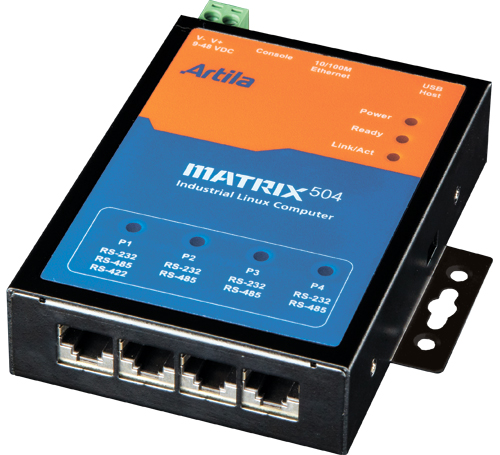
Comprehensive Product Summary – Artila M-502 ARM9 Linux System-on-Module
### 1. Product Overview
Product Name: M-502
Model: M-502
Series: Matrix 500 Series
Article Number: M-502
Manufacturer: Artila Electronics Co., Ltd.
Product Type: ARM9-based System-on-Module (SoM) / Embedded Linux Computer
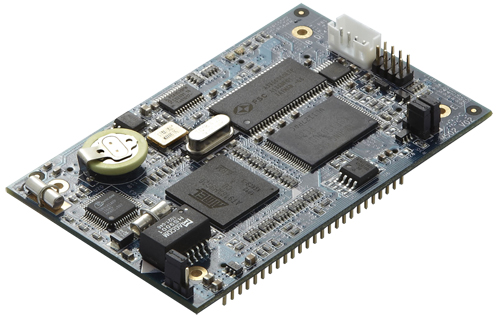
The Artila M-502 is a compact, credit-card-sized industrial-grade System-on-Module designed for embedded applications requiring reliable performance, low power consumption, and flexible connectivity. Built around the Atmel AT91SAM9G20 ARM926EJ-S processor running at 400 MHz, the M-502 integrates memory, networking, serial communication, and digital I/O interfaces into a single, ready-to-deploy module. It comes preloaded with Linux kernel 2.6.29, a full GNU toolchain, and a suite of embedded utilities, making it ideal for rapid development and deployment in industrial automation, intelligent transportation, building management, and energy control systems.
### 2. Key Features
- High-Performance ARM9 Core:
Powered by the Atmel AT91SAM9G20 SoC featuring a 400 MHz ARM926EJ-S ARM Thumb processor with integrated Memory Management Unit (MMU), 32 KB instruction cache, and 32 KB data cache.
- Compact, Industrial Design:
Credit-card-sized (80 mm × 50 mm) module with fanless operation and low power consumption (2 W typical).
- Pre-Installed Embedded Linux:
Linux kernel 2.6.29 with U-Boot bootloader, BusyBox utilities, and lighttpd web server preconfigured for immediate use.
- Comprehensive Connectivity:
- 4 × UART ports (RS-232/422/485 software-selectable)
- 1 × 10/100 Mbps Ethernet port with 1.5 kV isolation
- 2 × USB 2.0 full-speed (12 Mbps) host ports
- 1 × USB 2.0 device (client) port
- 32 × programmable GPIO lines (3.3 V CMOS compatible)
- SD/MMC interface, SPI, I²C, I²S, and 8-bit local bus
- Integrated Real-Time Clock (RTC):
ST M41T81 RTC with 48 mAh lithium backup battery for timekeeping during power loss.
- Flexible Software Environment:
Supports Linux and WinCE; includes GNU C/C++ cross-compilation toolchain for Linux/Windows hosts.
- Security and Networking:
Built-in support for SSL, SSH 1.0/2.0, SNMP v1/v3, and standard TCP/IP protocols.
- Industrial Reliability:
Operating temperature range 0 °C – 70 °C, solid-state storage (NAND Flash + DataFlash), and fanless design ensure durability in harsh environments.
### 3. Technical Specifications
Processor & Memory
- CPU: Atmel AT91SAM9G20 (ARM926EJ-S)
- Clock Speed: 400 MHz
- SDRAM: 64 MB
- NAND Flash: 128 MB
- DataFlash: 2 MB (system backup)
Networking
- Interface: 10/100 Mbps Ethernet (DAVICOM DM9161 PHY)
- Isolation: 1.5 kV magnetic isolation
- Connector: via CN3 header
Serial Communication (UART)
- Ports: 4 × UART (TXD, RXD, RTS, CTS; COM2 includes DCD, DTR, DSR)
- Signal Level: CMOS 3.3 V
- Baud Rate: up to 921.6 kbps
- Data Bits: 5–9
- Parity: None, Even, Odd, Mark, Space
- Stop Bits: 1, 1.5, 2
- Flow Control: RTS/CTS, XON/XOFF, None
- RS‑485 Mode: 9‑bit multi‑drop, hardware auto‑direction control
USB Interfaces
- Host Ports: 2 × USB 2.0 (full‑speed 12 Mbps)
- Device Port: 1 × USB 2.0 (client)
- Supported Peripherals: Flash drives, Wi‑Fi adapters (Ralink rt73usb, rt2500usb, Realtek RTL8187, ZyDAS zd1211rw), Ethernet adapters (RT8150), RS‑232 adapters (PL‑2303), ADSL/ISDN modems
Digital I/O (GPIO)
- 32 × programmable GPIOs (NXP PCA9539 controller)
- Direction: Input/Output configurable
- Input Voltage: Low ≤ 0.9 V, High ≥ 2.3 V
- Output Drive: 8 mA @ 0.5 V low, 1.8 V high
- Interrupt capability on input mode
Peripheral Buses
- I²C: TWD, TWCK signals; supports standard two‑wire serial devices
- SPI: MISO, MOSI, SPCK, CS1, CS2; supports Atmel DataFlash and other SPI devices
- I²S: TSCK, TWS, TSD (transmit); RSCK, RWS, RSD (receive); supports TI TLV320AIC23 audio codec
- SD/MMC: MCCDA, MCCK, MCDA0–MCDA3; compliant with SD Spec 1.0
- Local Bus: 8‑bit data (D0–D7), 8‑bit address (A0–A7), 3 chip selects (NCS0, NCS5, NCS6), RD/WR control
Debug & Control Interfaces
- JTAG port (NTRST, TDI, TMS, TCK, TDO)
- Serial console (RS‑232 TX/RX)
- Reset button, buzzer, system ready LED, LAN activity LED, 2‑pin DIP switch
Power & Environmental
- Input Voltage: 3.0 – 3.6 V DC (3.3 V nominal)
- Power Consumption: 2 – 2.5 W typical
- Operating Temperature: 0 °C to 70 °C
- Dimensions: 80 mm × 50 mm
- Mounting Holes: 4 × M2 (2.0 mm diameter)
- Connectors: CN1 (28 pins), CN2 (50 pins), CN3 (50 pins), 2.0 mm pitch
### 4. Functionality
The M‑502 operates as a fully functional embedded computer module capable of running Linux or WinCE operating systems. It integrates CPU, memory, storage, and I/O interfaces, allowing developers to embed it directly into custom carrier boards or industrial systems.
Typical Use Cases:
- Industrial automation controllers
- Intelligent transportation systems (ITS)
- Building automation and energy management
- Remote monitoring and data acquisition
- Embedded web servers and gateways
- Scenario control and smart device hubs
Operation:
The module boots from NAND Flash via U‑Boot, loads the Linux 2.6.29 kernel, and mounts the root filesystem (UBI/JFFS2/EXT2/EXT3). It provides network access through Ethernet or USB Wi‑Fi, serial communication via UARTs, and digital control through GPIOs. Developers can deploy applications using the provided GNU C/C++ toolchain and manage the system via SSH, Telnet, or web interface.
Compatibility:
- Compatible with standard Linux 2.6.x device drivers
- Supports USB mass storage, Wi‑Fi, Ethernet, and serial adapters
- Works with SD memory cards and SPI/I²C peripherals
- Cross‑platform development supported on Linux and Windows hosts
### 5. Components & Accessories
Included Components:
- M‑502 System‑on‑Module
- Pre‑installed Linux 2.6.29 OS and U‑Boot bootloader
- Pre‑configured lighttpd web server and network services
- GNU C/C++ cross‑compiler toolchain (on CD)
- Documentation and SDK with example programs
Optional Accessories:
- Evaluation board for M‑502 with standard connectors and power supply
- JTAG debug adapter
- USB Wi‑Fi dongles and Ethernet adapters
- SD memory cards for data storage
- DIN‑rail mountable enclosure for industrial deployment
Connectors:
- CN1 (28‑pin): Local bus and data signals
- CN2 (50‑pin): UARTs, GPIOs, control signals
- CN3 (50‑pin): Ethernet, SPI, SD, I²C, and additional GPIOs
### 6. Installation & Setup
Hardware Integration:
The M‑502 is mounted onto a carrier board via 2.0 mm pitch headers (CN1, CN2, CN3). Four M2 mounting holes provide secure mechanical fixation. Power is supplied at 3.3 V DC through the connector pins.
Boot Configuration:
- Boot Mode Selection via JP1 jumper:
- Pins 1–2: Boot from external Flash (default)
- Pins 2–3: Boot from internal ROM
Software Setup:
- Default IP Address: 192.168.2.127
- Netmask: 255.255.255.0
- SSH Login: root / root
- Telnet Login: guest / guest
- Terminal Type: VT100
Mounting External Storage:
- USB disk: `mount /mnt/sda1` or `/mnt/sdb1`
- SD card: `mount /mnt/mmc`
Web Server Configuration:
- Web root: `/usr/www`
- Configuration file: `/etc/lighttpd.conf`
- Default homepage: `index.html`
Network Discovery & Management:
- Java‑based Manager Utility (`manager.jar`) for device discovery and configuration over LAN.
### 7. Performance & Capabilities
Processing Performance:
- 400 MHz ARM9 core with MMU and dual 32 KB cache provides efficient multitasking and real‑time response.
Memory Performance:
- 64 MB SDRAM supports lightweight Linux applications and network services.
- 128 MB NAND Flash and 2 MB DataFlash ensure reliable storage for OS and user data.
Networking Performance:
- 10/100 Mbps Ethernet with 1.5 kV isolation for industrial network environments.
Serial Communication:
- Four UARTs support high‑speed (921.6 kbps) data transfer and multi‑protocol operation (RS‑232/422/485).
USB Performance:
- Two USB 2.0 full‑speed host ports (12 Mbps) for peripheral expansion.
- One USB device port for PC connection or firmware update.
Power Efficiency:
- Typical power consumption of 2 W at 3.3 V input enables fanless operation and low thermal footprint.
Limitations:
- Limited RAM (64 MB) restricts use to lightweight applications.
- USB ports operate at full speed (12 Mbps), not high speed (480 Mbps).
### 8. Standards & Compliance
Hardware Compliance:
- Ethernet IEEE 802.3 10/100 Base‑T
- USB 2.0 (full‑speed) compliant
- SD Card Specification 1.0
- SPI, I²C, I²S standard interfaces
- CMOS 3.3 V signal levels
Software Compliance:
- Linux Kernel 2.6.29 with POSIX GLIBC support
- File Systems: UBI, JFFS2, EXT2/EXT3, VFAT/FAT, NFS
- Network Protocols: IPv4, ICMP, ARP, DHCP, NTP, TCP, UDP, FTP, Telnet, HTTP, PPP, PPPoe, SNMP v1/v3, SSL, SSH 1/2
Certifications & Safety:
- 1.5 kV Ethernet isolation for industrial safety
- RoHS compliant manufacturing process
- Designed for industrial temperature range (0 °C – 70 °C)
### 9. Additional Information
Warranty & Support:
- Standard manufacturer warranty (typically 1 year, extendable by agreement)
- Technical support via email (sales@artila.com) and online resources (www.artila.com)
- Firmware updates and software patches available through Artila support portal
Maintenance:
- Solid‑state design requires minimal maintenance.
- RTC battery (48 mAh lithium) should be replaced periodically for timekeeping accuracy.
- Software updates can be applied via SSH or USB interface.
Development & Customization:
- SDK includes sample code for GPIO, UART, Ethernet, and SPI interfaces.
- Cross‑compilation supported on Linux and Windows hosts using GCC toolchain.
- Webmin and ipkg package management supported for system administration and software deployment.
Ordering Information:
- Model: M‑502
- Description: AT91SAM9G20 ARM9 400 MHz System‑on‑Module with 128 MB Flash and 64 MB SDRAM, pre‑installed Linux 2.6.29.
### Summary
The Artila M‑502 is a robust, Linux‑ready ARM9 System‑on‑Module engineered for industrial and embedded applications requiring compact form factor, reliable operation, and versatile connectivity. With its 400 MHz ARM926EJ‑S processor, integrated memory, and comprehensive I/O support—including Ethernet, USB, UART, SPI, I²C, I²S, and GPIO—the M‑502 provides a complete embedded computing platform. Pre‑installed Linux 2.6.29 and a full GNU toolchain enable rapid development and deployment of custom applications. Its low power consumption, fanless design, and industrial temperature tolerance make it suitable for automation, networked control, and IoT gateway solutions.
For developers seeking a reliable, ready‑to‑integrate embedded Linux module, the M‑502 delivers a balanced combination of performance, flexibility, and industrial durability.


 LOOKING FOR THE RIGHT
 M-502_Data-Sheet.pdf
PDF Catalog
M-502_Data-Sheet.pdf
PDF Catalog
 Warranty Declaration.pdf
PDF Catalog
Warranty Declaration.pdf
PDF Catalog
 M-502 User Guide.pdf
Manual
M-502 User Guide.pdf
Manual