DIN-68S-01
SUCHEN SIE DIE PASSENDE
INDUSTRIELLE LÖSUNG?
Entdecken Sie Embedded-, Kommunikations- und Automatisierungslösungen für Ihre Anwendung.
- High-Resolution Analog Input:
14-bit resolution with up to 800 kS/s sampling rate for single-channel operation, ensuring precise signal capture and analysis.
- Flexible Channel Configuration:
Supports 16 single-ended (SE) or 8 differential (DI) analog input channels, allowing users to adapt to various signal configurations and noise environments.
- Wide Input Voltage Range:
Programmable input ranges of ±10 V, ±5 V, ±2.5 V, ±1.25 V, ±0.625 V, and ±0.3125 V accommodate diverse signal levels.
- High Signal Integrity:
Input impedance of 10 MΩ and DC coupling minimize loading effects and preserve signal fidelity. Overvoltage protection up to ±20 V ensures robust operation in industrial environments.
- Dual 16-bit Analog Outputs:
Two analog output channels with ±10 V range, 16-bit resolution, and 10 V/μs slew rate for precise waveform generation and control applications.
- Comprehensive Digital I/O:
16 digital input and 16 digital output channels, TTL-compatible, supporting up to 1 MHz signal frequency for high-speed digital control and monitoring.
- Integrated Timer/Counter:
Two 32-bit general-purpose timer/counter channels with internal and external clock sources up to 33 MHz and 8 MHz respectively, enabling precise timing, event counting, and frequency measurement.
- High-Speed Data Transfer:
Supports both Polling and Direct Memory Access (DMA) modes for efficient data throughput and reduced CPU overhead.
- Multiple Trigger Sources:
Software, digital, and analog trigger options for flexible synchronization of data acquisition and generation tasks.
- Compact PCIe Form Factor:
Designed for standard PCI Express slots, offering high bandwidth and reliable connectivity for modern PCs and industrial computers.
14-bit resolution with up to 800 kS/s sampling rate for single-channel operation, ensuring precise signal capture and analysis.
- Flexible Channel Configuration:
Supports 16 single-ended (SE) or 8 differential (DI) analog input channels, allowing users to adapt to various signal configurations and noise environments.
- Wide Input Voltage Range:
Programmable input ranges of ±10 V, ±5 V, ±2.5 V, ±1.25 V, ±0.625 V, and ±0.3125 V accommodate diverse signal levels.
- High Signal Integrity:
Input impedance of 10 MΩ and DC coupling minimize loading effects and preserve signal fidelity. Overvoltage protection up to ±20 V ensures robust operation in industrial environments.
- Dual 16-bit Analog Outputs:
Two analog output channels with ±10 V range, 16-bit resolution, and 10 V/μs slew rate for precise waveform generation and control applications.
- Comprehensive Digital I/O:
16 digital input and 16 digital output channels, TTL-compatible, supporting up to 1 MHz signal frequency for high-speed digital control and monitoring.
- Integrated Timer/Counter:
Two 32-bit general-purpose timer/counter channels with internal and external clock sources up to 33 MHz and 8 MHz respectively, enabling precise timing, event counting, and frequency measurement.
- High-Speed Data Transfer:
Supports both Polling and Direct Memory Access (DMA) modes for efficient data throughput and reduced CPU overhead.
- Multiple Trigger Sources:
Software, digital, and analog trigger options for flexible synchronization of data acquisition and generation tasks.
- Compact PCIe Form Factor:
Designed for standard PCI Express slots, offering high bandwidth and reliable connectivity for modern PCs and industrial computers.
Comprehensive Product Summary – PCIe-9121
### 1. Product Overview
Product Name: PCIe-9121
Model Number: PCIe-9121
Series: PCI Express Data Acquisition (DAQ) Series
Article Number: PCIe-9121
Manufacturer: [Manufacturer name not provided in source; typically associated with industrial DAQ hardware vendors]
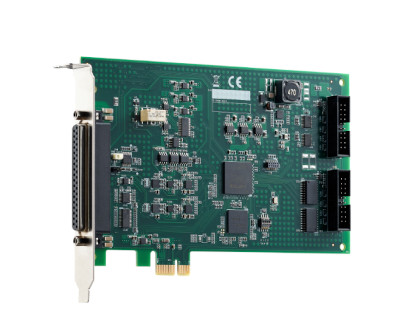
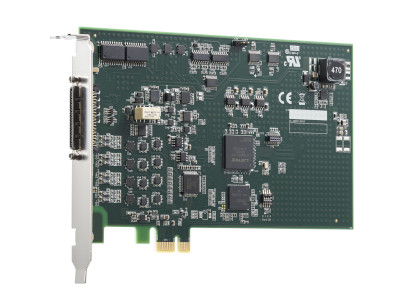
The PCIe-9121 is a high-performance, multifunction data acquisition (DAQ) card designed for precision analog and digital signal measurement, generation, and control applications. It integrates high-resolution analog input and output channels, digital I/O lines, and general-purpose timer/counter functionality into a single PCI Express (PCIe) interface card. With its 14-bit analog input resolution, 16-bit analog output capability, and high sampling rates up to 800 kS/s, the PCIe-9121 is engineered for demanding industrial, laboratory, and embedded measurement systems requiring accurate, high-speed data acquisition and signal generation.
### 2. Key Features
- High-Resolution Analog Input:
14-bit resolution with up to 800 kS/s sampling rate for single-channel operation, ensuring precise signal capture and analysis.
- Flexible Channel Configuration:
Supports 16 single-ended (SE) or 8 differential (DI) analog input channels, allowing users to adapt to various signal configurations and noise environments.
- Wide Input Voltage Range:
Programmable input ranges of ±10 V, ±5 V, ±2.5 V, ±1.25 V, ±0.625 V, and ±0.3125 V accommodate diverse signal levels.
- High Signal Integrity:
Input impedance of 10 MΩ and DC coupling minimize loading effects and preserve signal fidelity. Overvoltage protection up to ±20 V ensures robust operation in industrial environments.
- Dual 16-bit Analog Outputs:
Two analog output channels with ±10 V range, 16-bit resolution, and 10 V/μs slew rate for precise waveform generation and control applications.
- Comprehensive Digital I/O:
16 digital input and 16 digital output channels, TTL-compatible, supporting up to 1 MHz signal frequency for high-speed digital control and monitoring.
- Integrated Timer/Counter:
Two 32-bit general-purpose timer/counter channels with internal and external clock sources up to 33 MHz and 8 MHz respectively, enabling precise timing, event counting, and frequency measurement.
- High-Speed Data Transfer:
Supports both Polling and Direct Memory Access (DMA) modes for efficient data throughput and reduced CPU overhead.
- Multiple Trigger Sources:
Software, digital, and analog trigger options for flexible synchronization of data acquisition and generation tasks.
- Compact PCIe Form Factor:
Designed for standard PCI Express slots, offering high bandwidth and reliable connectivity for modern PCs and industrial computers.
### 3. Technical Specifications
Analog Input (AI):
- Channels: 16 single-ended or 8 differential
- Resolution: 14-bit
- Sampling Rate:
- Single-channel: up to 800 kS/s
- Multi-channel scanning: up to 400 kS/s
- FIFO Buffer: 4K samples onboard
- Input Range: ±10 V, ±5 V, ±2.5 V, ±1.25 V, ±0.625 V, ±0.3125 V
- Input Impedance: 10 MΩ
- Input Coupling: DC
- Overvoltage Protection: Continuous ±20 V
- Trigger Sources: Software, Digital, Analog
- Data Transfer: Polling or DMA
- Signal-to-Noise Ratio (SNR): 90 dB
- Effective Number of Bits (ENOB): 14.5 bits
Analog Output (AO):
- Channels: 2
- Resolution: 16-bit
- Output Range: ±10 V
- FIFO Buffer: 1K samples (shared between 2 channels)
- Output Drive Capability: ±20 mA max
- Slew Rate: 10 V/μs
- Settling Time: [Not specified; typically microseconds range]
- Output Coupling: DC
- Output Impedance: < 0.1 Ω
- Trigger Sources: Software, Digital
- Data Transfer: Polling or DMA
Digital Input (DI):
- Channels: 16
- Compatibility: TTL
- Input Impedance: Pull-low 100 KΩ
- Frequency Range: 0.01 Hz to 1 MHz
- FIFO Buffer: 512 samples onboard
- Isolation: None
- Trigger Sources: Software, Digital
- Data Transfer: Polling or DMA
Digital Output (DO):
- Channels: 16
- Compatibility: TTL
- Output Impedance: Pull-low 100 KΩ
- Frequency Range: 0.01 Hz to 1 MHz
- FIFO Buffer: 512 samples onboard
- Isolation: None
- Trigger Sources: Software, Digital
- Data Transfer: Polling or DMA
Timer/Counter:
- Channels: 2
- Resolution: 32-bit
- Compatibility: TTL
- Clock Sources:
- Internal clock: fixed at 33 MHz
- External clock: 0.01 Hz to 8 MHz (max)
- Clock source selectable via software
- Output Frequency:
- Internal clock: up to 16.5 MHz
- External clock: up to 32 MHz (max)
General Specifications:
- Dimensions (L × W × H): 169.55 mm × 16.15 mm × 98.4 mm
- Connector Type: 37-pin D-type connector
- Bus Interface: PCI Express (PCIe)
- Isolation: None (non-isolated design)
- Operating Environment: [Not specified; typically 0–50°C for industrial cards]
### 4. Functionality
The PCIe-9121 operates as a multifunction data acquisition card, integrating analog, digital, and timing functions into a single PCIe interface. It is designed to capture, process, and generate electrical signals for measurement, control, and automation tasks.
Analog Input Functionality:
The analog input subsystem supports both single-ended and differential configurations, allowing users to measure multiple voltage signals simultaneously. The 14-bit ADC provides high-resolution sampling, while the onboard FIFO buffer ensures continuous data streaming without loss. The card supports software, digital, and analog triggering, enabling precise synchronization with external events or other system components.
Analog Output Functionality:
The two 16-bit analog output channels can generate precise voltage waveforms within ±10 V range. These outputs are ideal for driving actuators, controlling analog devices, or simulating sensor signals. The high slew rate and low output impedance ensure accurate and stable signal generation even under dynamic load conditions.
Digital I/O Functionality:
The 16 digital input and 16 digital output channels provide flexible control and monitoring capabilities. TTL compatibility ensures easy integration with standard logic-level devices. The digital I/O subsystem supports high-frequency operation up to 1 MHz, suitable for pulse counting, event detection, and digital control tasks.
Timer/Counter Functionality:
Two 32-bit timer/counter channels allow precise timing, frequency measurement, and event counting. The user can select between internal and external clock sources, enabling synchronization with system clocks or external timing references. This makes the PCIe-9121 suitable for applications requiring accurate timing control, such as motor control, pulse-width modulation (PWM), or frequency analysis.
Use Cases and Applications:
- Industrial process monitoring and control
- Laboratory data acquisition and signal analysis
- Automated test equipment (ATE)
- Sensor signal conditioning and measurement
- Control system prototyping and simulation
- Research and development instrumentation
- Embedded system integration for real-time measurement
Compatibility:
The PCIe-9121 is compatible with standard PCI Express slots and can be integrated into desktop PCs, industrial computers, and embedded systems. It supports common data acquisition software frameworks and can be accessed via vendor-provided drivers and APIs for Windows or Linux environments.
### 5. Components & Accessories
Included Components:
- PCIe-9121 DAQ card
- 37-pin D-type connector interface
- User manual and installation guide (digital or printed)
- Driver and software utilities (typically provided on CD or via download)
Optional Accessories:
- Shielded cable assemblies for analog and digital I/O
- Terminal boards for easy signal wiring and breakout
- External clock or trigger modules
- Mounting brackets or retention clips for secure installation
Connectors:
- Primary I/O Connector: 37-pin D-type connector providing access to analog inputs, analog outputs, digital I/O lines, and timing signals.
- Bus Interface: PCI Express edge connector for host communication and power supply.
### 6. Installation & Setup
System Requirements:
- Available PCI Express slot (x1 or higher)
- Compatible operating system (Windows or Linux, depending on driver support)
- Minimum CPU and memory resources as recommended by the manufacturer
Installation Steps:
1. Power off the host computer and open the chassis.
2. Insert the PCIe-9121 card into an available PCIe slot.
3. Secure the card using the bracket screw.
4. Connect external signals to the 37-pin D-type connector using appropriate cables or terminal boards.
5. Power on the system and install the device drivers.
6. Configure the card using the provided software utility or API.
Mounting Options:
Standard PCIe bracket for desktop or industrial PC chassis. Optional low-profile bracket may be available for compact systems.
Configuration:
Software-based configuration allows selection of input ranges, channel modes (SE/DI), trigger sources, sampling rates, and clock sources. The card supports both manual and programmatic configuration through driver APIs.
### 7. Performance & Capabilities
Analog Input Performance:
- High-speed sampling up to 800 kS/s ensures accurate capture of transient signals.
- 14-bit resolution provides fine granularity for voltage measurement.
- 90 dB SNR and 14.5-bit ENOB ensure low noise and high fidelity.
- Programmable input ranges enhance flexibility for different signal amplitudes.
Analog Output Performance:
- 16-bit resolution enables smooth waveform generation.
- ±10 V range supports a wide variety of analog devices.
- 10 V/μs slew rate and <0.1 Ω output impedance ensure fast and stable output transitions.
Digital I/O Performance:
- TTL-level compatibility ensures easy integration with logic circuits.
- Up to 1 MHz operation supports high-speed digital control and monitoring.
- Onboard FIFO buffers (512 samples) enable efficient data streaming.
Timer/Counter Performance:
- 32-bit resolution allows long-duration timing and high-precision counting.
- Internal 33 MHz clock provides stable timing reference.
- External clock input up to 8 MHz allows synchronization with external systems.
- Output frequency up to 32 MHz supports high-speed timing applications.
Limitations:
- No galvanic isolation between channels or between analog and digital sections.
- Limited onboard memory (4K AI FIFO, 1K AO FIFO, 512 DI/DO FIFO) may constrain very high-speed continuous acquisition without DMA.
- Environmental specifications not detailed; may require controlled conditions for optimal performance.
### 8. Standards & Compliance
Bus Interface Standard: PCI Express (PCIe)
Signal Standards: TTL-compatible digital I/O, ±10 V analog I/O
Electrical Protection: ±20 V continuous overvoltage protection on analog inputs
Compliance:
- Designed to meet general industrial and laboratory DAQ standards
- Likely compliant with CE and FCC electromagnetic compatibility (EMC) requirements (manufacturer confirmation required)
- RoHS-compliant construction (assumed for modern PCIe hardware)
Industry Standards Supported:
- PCI Express Base Specification
- TTL logic level compatibility
- IEEE data acquisition and measurement conventions
### 9. Additional Information
Warranty:
Typically includes a standard manufacturer warranty (1–3 years depending on vendor policy) covering defects in materials and workmanship.
Technical Support:
Comprehensive technical support available through manufacturer’s website, including driver downloads, software updates, and user documentation.
Maintenance:
- Periodic inspection of connectors and contacts recommended.
- Ensure proper grounding and shielding to minimize noise.
- Firmware and driver updates should be applied as released by the manufacturer.
Software & Driver Updates:
Vendor-provided drivers support major operating systems and programming environments. Updates may include performance enhancements, bug fixes, and compatibility improvements.
Long-Term Availability:
As part of a PCIe-based DAQ series, the PCIe-9121 is designed for long-term availability and support in industrial and research applications.
### Summary
The PCIe-9121 is a versatile, high-precision PCI Express data acquisition card that combines 14-bit analog input, 16-bit analog output, digital I/O, and timer/counter functions into a single, compact module. With its high sampling rate, wide input range, and flexible triggering and data transfer options, it is ideally suited for applications requiring accurate, high-speed measurement and control. Its robust design, comprehensive functionality, and PCIe interface make it a reliable choice for engineers, researchers, and system integrators developing advanced test, measurement, and automation systems.

### 1. Product Overview
Product Name: PCIe-9121
Model Number: PCIe-9121
Series: PCI Express Data Acquisition (DAQ) Series
Article Number: PCIe-9121
Manufacturer: [Manufacturer name not provided in source; typically associated with industrial DAQ hardware vendors]
The PCIe-9121 is a high-performance, multifunction data acquisition (DAQ) card designed for precision analog and digital signal measurement, generation, and control applications. It integrates high-resolution analog input and output channels, digital I/O lines, and general-purpose timer/counter functionality into a single PCI Express (PCIe) interface card. With its 14-bit analog input resolution, 16-bit analog output capability, and high sampling rates up to 800 kS/s, the PCIe-9121 is engineered for demanding industrial, laboratory, and embedded measurement systems requiring accurate, high-speed data acquisition and signal generation.
### 2. Key Features
- High-Resolution Analog Input:
14-bit resolution with up to 800 kS/s sampling rate for single-channel operation, ensuring precise signal capture and analysis.
- Flexible Channel Configuration:
Supports 16 single-ended (SE) or 8 differential (DI) analog input channels, allowing users to adapt to various signal configurations and noise environments.
- Wide Input Voltage Range:
Programmable input ranges of ±10 V, ±5 V, ±2.5 V, ±1.25 V, ±0.625 V, and ±0.3125 V accommodate diverse signal levels.
- High Signal Integrity:
Input impedance of 10 MΩ and DC coupling minimize loading effects and preserve signal fidelity. Overvoltage protection up to ±20 V ensures robust operation in industrial environments.
- Dual 16-bit Analog Outputs:
Two analog output channels with ±10 V range, 16-bit resolution, and 10 V/μs slew rate for precise waveform generation and control applications.
- Comprehensive Digital I/O:
16 digital input and 16 digital output channels, TTL-compatible, supporting up to 1 MHz signal frequency for high-speed digital control and monitoring.
- Integrated Timer/Counter:
Two 32-bit general-purpose timer/counter channels with internal and external clock sources up to 33 MHz and 8 MHz respectively, enabling precise timing, event counting, and frequency measurement.
- High-Speed Data Transfer:
Supports both Polling and Direct Memory Access (DMA) modes for efficient data throughput and reduced CPU overhead.
- Multiple Trigger Sources:
Software, digital, and analog trigger options for flexible synchronization of data acquisition and generation tasks.
- Compact PCIe Form Factor:
Designed for standard PCI Express slots, offering high bandwidth and reliable connectivity for modern PCs and industrial computers.
### 3. Technical Specifications
Analog Input (AI):
- Channels: 16 single-ended or 8 differential
- Resolution: 14-bit
- Sampling Rate:
- Single-channel: up to 800 kS/s
- Multi-channel scanning: up to 400 kS/s
- FIFO Buffer: 4K samples onboard
- Input Range: ±10 V, ±5 V, ±2.5 V, ±1.25 V, ±0.625 V, ±0.3125 V
- Input Impedance: 10 MΩ
- Input Coupling: DC
- Overvoltage Protection: Continuous ±20 V
- Trigger Sources: Software, Digital, Analog
- Data Transfer: Polling or DMA
- Signal-to-Noise Ratio (SNR): 90 dB
- Effective Number of Bits (ENOB): 14.5 bits
Analog Output (AO):
- Channels: 2
- Resolution: 16-bit
- Output Range: ±10 V
- FIFO Buffer: 1K samples (shared between 2 channels)
- Output Drive Capability: ±20 mA max
- Slew Rate: 10 V/μs
- Settling Time: [Not specified; typically microseconds range]
- Output Coupling: DC
- Output Impedance: < 0.1 Ω
- Trigger Sources: Software, Digital
- Data Transfer: Polling or DMA
Digital Input (DI):
- Channels: 16
- Compatibility: TTL
- Input Impedance: Pull-low 100 KΩ
- Frequency Range: 0.01 Hz to 1 MHz
- FIFO Buffer: 512 samples onboard
- Isolation: None
- Trigger Sources: Software, Digital
- Data Transfer: Polling or DMA
Digital Output (DO):
- Channels: 16
- Compatibility: TTL
- Output Impedance: Pull-low 100 KΩ
- Frequency Range: 0.01 Hz to 1 MHz
- FIFO Buffer: 512 samples onboard
- Isolation: None
- Trigger Sources: Software, Digital
- Data Transfer: Polling or DMA
Timer/Counter:
- Channels: 2
- Resolution: 32-bit
- Compatibility: TTL
- Clock Sources:
- Internal clock: fixed at 33 MHz
- External clock: 0.01 Hz to 8 MHz (max)
- Clock source selectable via software
- Output Frequency:
- Internal clock: up to 16.5 MHz
- External clock: up to 32 MHz (max)
General Specifications:
- Dimensions (L × W × H): 169.55 mm × 16.15 mm × 98.4 mm
- Connector Type: 37-pin D-type connector
- Bus Interface: PCI Express (PCIe)
- Isolation: None (non-isolated design)
- Operating Environment: [Not specified; typically 0–50°C for industrial cards]
### 4. Functionality
The PCIe-9121 operates as a multifunction data acquisition card, integrating analog, digital, and timing functions into a single PCIe interface. It is designed to capture, process, and generate electrical signals for measurement, control, and automation tasks.
Analog Input Functionality:
The analog input subsystem supports both single-ended and differential configurations, allowing users to measure multiple voltage signals simultaneously. The 14-bit ADC provides high-resolution sampling, while the onboard FIFO buffer ensures continuous data streaming without loss. The card supports software, digital, and analog triggering, enabling precise synchronization with external events or other system components.
Analog Output Functionality:
The two 16-bit analog output channels can generate precise voltage waveforms within ±10 V range. These outputs are ideal for driving actuators, controlling analog devices, or simulating sensor signals. The high slew rate and low output impedance ensure accurate and stable signal generation even under dynamic load conditions.
Digital I/O Functionality:
The 16 digital input and 16 digital output channels provide flexible control and monitoring capabilities. TTL compatibility ensures easy integration with standard logic-level devices. The digital I/O subsystem supports high-frequency operation up to 1 MHz, suitable for pulse counting, event detection, and digital control tasks.
Timer/Counter Functionality:
Two 32-bit timer/counter channels allow precise timing, frequency measurement, and event counting. The user can select between internal and external clock sources, enabling synchronization with system clocks or external timing references. This makes the PCIe-9121 suitable for applications requiring accurate timing control, such as motor control, pulse-width modulation (PWM), or frequency analysis.
Use Cases and Applications:
- Industrial process monitoring and control
- Laboratory data acquisition and signal analysis
- Automated test equipment (ATE)
- Sensor signal conditioning and measurement
- Control system prototyping and simulation
- Research and development instrumentation
- Embedded system integration for real-time measurement
Compatibility:
The PCIe-9121 is compatible with standard PCI Express slots and can be integrated into desktop PCs, industrial computers, and embedded systems. It supports common data acquisition software frameworks and can be accessed via vendor-provided drivers and APIs for Windows or Linux environments.
### 5. Components & Accessories
Included Components:
- PCIe-9121 DAQ card
- 37-pin D-type connector interface
- User manual and installation guide (digital or printed)
- Driver and software utilities (typically provided on CD or via download)
Optional Accessories:
- Shielded cable assemblies for analog and digital I/O
- Terminal boards for easy signal wiring and breakout
- External clock or trigger modules
- Mounting brackets or retention clips for secure installation
Connectors:
- Primary I/O Connector: 37-pin D-type connector providing access to analog inputs, analog outputs, digital I/O lines, and timing signals.
- Bus Interface: PCI Express edge connector for host communication and power supply.
### 6. Installation & Setup
System Requirements:
- Available PCI Express slot (x1 or higher)
- Compatible operating system (Windows or Linux, depending on driver support)
- Minimum CPU and memory resources as recommended by the manufacturer
Installation Steps:
1. Power off the host computer and open the chassis.
2. Insert the PCIe-9121 card into an available PCIe slot.
3. Secure the card using the bracket screw.
4. Connect external signals to the 37-pin D-type connector using appropriate cables or terminal boards.
5. Power on the system and install the device drivers.
6. Configure the card using the provided software utility or API.
Mounting Options:
Standard PCIe bracket for desktop or industrial PC chassis. Optional low-profile bracket may be available for compact systems.
Configuration:
Software-based configuration allows selection of input ranges, channel modes (SE/DI), trigger sources, sampling rates, and clock sources. The card supports both manual and programmatic configuration through driver APIs.
### 7. Performance & Capabilities
Analog Input Performance:
- High-speed sampling up to 800 kS/s ensures accurate capture of transient signals.
- 14-bit resolution provides fine granularity for voltage measurement.
- 90 dB SNR and 14.5-bit ENOB ensure low noise and high fidelity.
- Programmable input ranges enhance flexibility for different signal amplitudes.
Analog Output Performance:
- 16-bit resolution enables smooth waveform generation.
- ±10 V range supports a wide variety of analog devices.
- 10 V/μs slew rate and <0.1 Ω output impedance ensure fast and stable output transitions.
Digital I/O Performance:
- TTL-level compatibility ensures easy integration with logic circuits.
- Up to 1 MHz operation supports high-speed digital control and monitoring.
- Onboard FIFO buffers (512 samples) enable efficient data streaming.
Timer/Counter Performance:
- 32-bit resolution allows long-duration timing and high-precision counting.
- Internal 33 MHz clock provides stable timing reference.
- External clock input up to 8 MHz allows synchronization with external systems.
- Output frequency up to 32 MHz supports high-speed timing applications.
Limitations:
- No galvanic isolation between channels or between analog and digital sections.
- Limited onboard memory (4K AI FIFO, 1K AO FIFO, 512 DI/DO FIFO) may constrain very high-speed continuous acquisition without DMA.
- Environmental specifications not detailed; may require controlled conditions for optimal performance.
### 8. Standards & Compliance
Bus Interface Standard: PCI Express (PCIe)
Signal Standards: TTL-compatible digital I/O, ±10 V analog I/O
Electrical Protection: ±20 V continuous overvoltage protection on analog inputs
Compliance:
- Designed to meet general industrial and laboratory DAQ standards
- Likely compliant with CE and FCC electromagnetic compatibility (EMC) requirements (manufacturer confirmation required)
- RoHS-compliant construction (assumed for modern PCIe hardware)
Industry Standards Supported:
- PCI Express Base Specification
- TTL logic level compatibility
- IEEE data acquisition and measurement conventions
### 9. Additional Information
Warranty:
Typically includes a standard manufacturer warranty (1–3 years depending on vendor policy) covering defects in materials and workmanship.
Technical Support:
Comprehensive technical support available through manufacturer’s website, including driver downloads, software updates, and user documentation.
Maintenance:
- Periodic inspection of connectors and contacts recommended.
- Ensure proper grounding and shielding to minimize noise.
- Firmware and driver updates should be applied as released by the manufacturer.
Software & Driver Updates:
Vendor-provided drivers support major operating systems and programming environments. Updates may include performance enhancements, bug fixes, and compatibility improvements.
Long-Term Availability:
As part of a PCIe-based DAQ series, the PCIe-9121 is designed for long-term availability and support in industrial and research applications.
### Summary
The PCIe-9121 is a versatile, high-precision PCI Express data acquisition card that combines 14-bit analog input, 16-bit analog output, digital I/O, and timer/counter functions into a single, compact module. With its high sampling rate, wide input range, and flexible triggering and data transfer options, it is ideally suited for applications requiring accurate, high-speed measurement and control. Its robust design, comprehensive functionality, and PCIe interface make it a reliable choice for engineers, researchers, and system integrators developing advanced test, measurement, and automation systems.
-
PCIe-9100_50M-18094-1030_13.pdf
PDF Catalog
-
PCIe-9100_Series_manual.pdf
Manual
- DIN-68S-01 - 68pin SCSI-II termination board DIN rail w/o cable
- ACL-10568-1 - SCSI-VHDCI cable 1m for DAQ series
- ACL-10568-2 - SCSI-VHDCI cable 2m for DAQ series
- ACL-10568-3 - SCSI-VHDCI cable 3m for DAQ series