
 LOOKING FOR THE RIGHT
INDUSTRIAL SOLUTION?
Discover embedded, communication and automation solutions tailored to your application.
Modules
Industrial Computers offer a complete range of EtherCAT modules to meet the needs of industrial automation systems. These modules provide a reliable, cost-effective solution for controlling and monitoring industrial processes. With a wide range of features, such as fast data transmission, real-time control, and easy integration, these modules are ideal for any industrial application.
Products
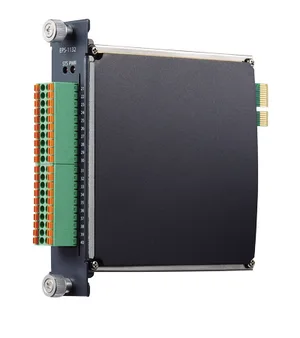 EPS-1132
- **32‑Channel Sinking Digital Input:** Supports 32 independent digital input channels conforming to IEC 61131‑2 Type 1/3 standards. - **Wide Operating Temperature Range:** Reliable operation from –20 °C to +60 °C, suitable for harsh industrial environments. - **Hot‑Swappable Design:** Modules can be replaced without powering down the system, reducing mean time to repair (MTTR). - **Compact Form Factor:** 100 mm (L) × 100 mm (H) module size allows high‑density installation in limited spaces. - **Quick‑Removable Connector:** Equipped with a Phoenix Contact DFMC series 2 × 20‑pin European‑type connector for simplified wiring and maintenance. - **High Electrical Isolation:** 2 kV DC isolation between channels and ground ensures signal integrity and protection. - **Self‑Diagnostic Monitoring:** Built‑in power, communication, and watchdog diagnostics for module health monitoring. - **IEC 61131 Compliance:** Fully compliant with industrial control standards for digital input modules. - **Slave Module Health Monitoring:** Continuous status feedback through EtherCAT communication. - **Integration with LinkMasterPro™:** ADLINK’s EtherCAT configuration utility automatically detects installed modules and generates corresponding ESI (EtherCAT Slave Information) files.
Manufacturer: No category
Category: Modules
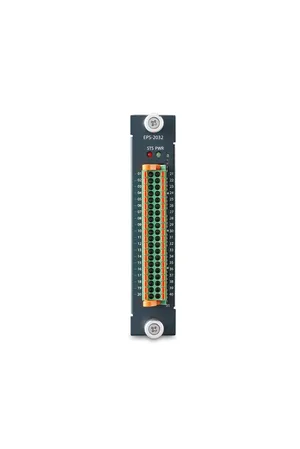 EPS-2032
- **32‑Channel Sourcing Digital Outputs:** Provides 32 independent sourcing‑type digital output channels for high‑density control applications. - **EtherCAT Slave Compatibility:** Fully compliant with EtherCAT communication standards, supporting COE and FOE protocols. - **IEC 61131‑2 Compliance:** Meets industrial control standards for digital I/O modules. - **Hot‑Swappable Design:** Allows module replacement without system power interruption, minimizing downtime. - **Self‑Diagnostic Functions:** Monitors power, communication, and watchdog timer (WDT) status for enhanced reliability. - **Wide Operating Temperature Range:** Operates reliably from ‑20 °C to +60 °C, suitable for harsh industrial environments. - **Compact Form Factor:** 100 mm (L) × 100 mm (H) footprint for high‑density installations. - **Quick‑Removable European‑Type Connector:** Phoenix Contact DFMC series connector simplifies wiring and maintenance. - **LED Indicators:** Individual channel LEDs and system status indicators for easy visual diagnostics. - **High Isolation Protection:** 2 kV DC isolation between channels and ground ensures electrical safety and noise immunity. - **Integration with LinkMasterPro™:** ADLINK’s Windows‑based EtherCAT utility automatically detects installed modules and generates ESI (EtherCAT Slave Information) files for configuration. - **Environmental Compliance:** Designed in accordance with RoHS and WEEE directives for environmental responsibility.
Manufacturer: No category
Category: Modules
EPS-2132
- **32‑Channel Sinking Digital Outputs:** Provides 32 individually addressable sinking‑type digital output channels for high‑density control applications. - **Wide Operating Temperature Range:** Reliable operation from **‑20°C to +60°C**, suitable for harsh industrial environments. - **Compact Form Factor:** Space‑efficient design measuring **100 mm (L) × 100 mm (H)** for high‑density installations. - **Hot‑Swappable Design:** Modules can be replaced without powering down the system, minimizing downtime and maintenance effort. - **Quick‑Removable Connector:** Equipped with a **Phoenix Contact DFMC series** connector for simplified wiring and maintenance. - **High Isolation Protection:** 2 kV DC isolation between channels and chassis/ground ensures electrical safety and signal integrity. - **Self‑Diagnostic Functions:** Monitors power, communication, and watchdog timer (WDT) status for enhanced reliability. - **IEC‑61131 Compliance:** Meets industrial control standards for digital I/O modules. - **EtherCAT Compatibility:** Fully interoperable with certified third‑party EtherCAT masters and ADLINK’s Talos controllers. - **Rugged Construction:** Designed for vibration, shock, and EMC compliance per EN 60068‑2 and EN 61000‑6 standards. - **Intelligent Monitoring:** FPGA and ARM‑based architecture enables real‑time monitoring of module health, temperature, and usage cycles.
Manufacturer: No category
Category: Modules
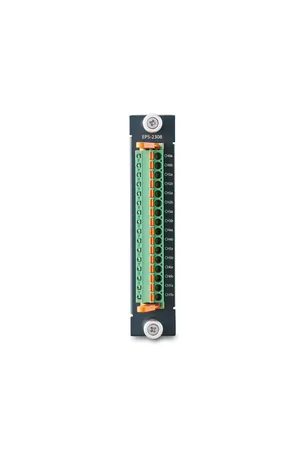 EPS-2308
- **8‑Channel Relay Output:** Provides eight independent SPST (Single Pole Single Throw) relay outputs for flexible control of external devices. - **High Isolation Protection:** 2 kV DC isolation between channels, chassis, and ground ensures electrical safety and noise immunity. - **Wide Operating Temperature Range:** Fully functional from **–20 °C to +60 °C**, suitable for industrial environments. - **Compact Form Factor:** 100 mm (L) × 100 mm (H) module size allows dense installation in EPS chassis. - **Hot‑Swappable Design:** Modules can be replaced without powering down the system, minimizing downtime. - **Quick‑Removable Connector:** Equipped with a Weidmüller OMNIMATE Signal BL/SL 5.08 mm connector for easy wiring and maintenance. - **Relay Lifecycle Monitoring:** Integrated self‑diagnostic functions monitor relay health and module status. - **IEC 61131 Compliance:** Conforms to international industrial control standards for interoperability and reliability. - **Slave Module Health Monitoring:** Continuous status reporting via EtherCAT communication. - **Self‑Diagnostics:** Monitors power, communication, and watchdog timer (WDT) conditions. - **LinkMasterPro™ Compatibility:** Fully supported by ADLINK’s EtherCAT configuration utility for automatic ESI file generation and system configuration. - **Environmental Robustness:** Designed for vibration, shock, and EMC compliance per EN 60068‑2 and EN 61000‑6 standards.
Manufacturer: No category
Category: Modules
EPS-3032
- **High‑Density Analog Input:** 32 single‑ended or 16 differential analog input channels. - **Wide Input Range:** ±10 V input range suitable for standard industrial voltage signals. - **High Resolution and Accuracy:** 16‑bit A/D conversion with ±1 mV offset error and ±0.05 % of full‑scale range (FSR) gain error. - **Fast Sampling Rate:** Up to 100 kS/s aggregate sampling rate for high‑speed data acquisition. - **Robust Electrical Isolation:** 2 kV DC isolation between channels and chassis/ground for noise immunity and safety. - **Hot‑Swappable Design:** Supports module replacement without system power‑down, minimizing downtime. - **Compact Form Factor:** 100 mm (L) × 100 mm (H) footprint for high‑density installations. - **Wide Operating Temperature:** Reliable operation from −20 °C to +60 °C. - **Quick‑Removable Connector:** Phoenix Contact DFMC series plug‑in terminal block for simplified wiring. - **Self‑Diagnostics:** Onboard temperature monitoring and module health status reporting. - **IEC 61131 Compliance:** Conforms to industrial control standards for interoperability. - **EtherCAT Compatibility:** Fully compatible with ADLINK’s EPS‑6000 bus coupler and third‑party EtherCAT masters via ESI file integration.
Manufacturer: No category
Category: Modules
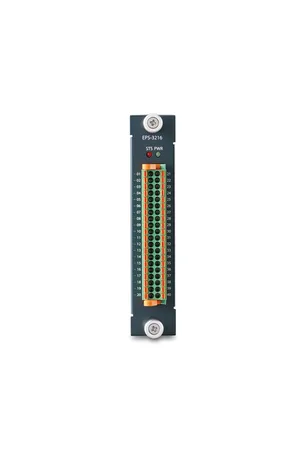 EPS-3216
- **16‑Channel 0–20 mA Differential Analog Input:** Supports 16 single‑ended or differential current input channels for high‑density signal acquisition. - **High Sampling Rate:** 100 kS/s per channel ensures accurate and fast data capture for dynamic process monitoring. - **16‑Bit Resolution:** Provides fine granularity and precision in current measurement. - **Wide Operating Temperature Range:** Fully functional from –20 °C to +60 °C, suitable for harsh industrial environments. - **Hot‑Swappable Design:** Modules can be replaced without powering down the system, minimizing downtime. - **Self‑Diagnostic Functions:** Monitors power, communication, and watchdog timer (WDT) status for system reliability. - **Quick‑Removable European‑Type Connector:** Phoenix Contact DFMC series connector allows easy wiring and maintenance. - **Compact Form Factor:** 100 mm (L) × 100 mm (H) module size optimizes panel space. - **IEC 61131 Compliance:** Meets international standards for programmable controller I/O modules. - **High Isolation Protection:** 2 kV DC isolation between channels, chassis, and ground ensures signal integrity and safety. - **Slave Module Health Monitoring:** Continuous status feedback through EtherCAT communication. - **Integration with LinkMasterPro™:** ADLINK’s Windows‑based EtherCAT configuration utility automatically detects modules and generates ESI (EtherCAT Slave Information) files.
Manufacturer: No category
Category: Modules
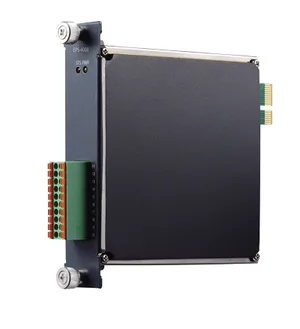 EPS-3504
- **4‑Channel RTD Input:** Supports four independent RTD sensor channels for simultaneous temperature measurement. - **Sensor Compatibility:** Compatible with PT100, PT500, and PT1000 platinum RTDs. - **Wiring Flexibility:** Supports 2‑wire, 3‑wire, and 4‑wire measurement configurations for optimal accuracy and noise immunity. - **High Resolution:** 24‑bit A/D conversion ensures precise temperature readings and fine measurement granularity. - **Sampling Rate:** Adjustable between 5 Hz and 20 Hz, balancing response time and accuracy. - **Wide Temperature Range:** Measures from ‑200 °C to +850 °C, suitable for a broad range of industrial processes. - **High Accuracy:** ±0.007 % of full‑scale range (FSR) DC accuracy and ±0.5 °C temperature accuracy. - **Excitation Current:** Up to 500 µA per channel for stable RTD excitation. - **Electrical Isolation:** 2 kV DC isolation between channels and ground, ensuring signal integrity and protection against electrical noise. - **Hot‑Swappable:** Can be replaced or added without powering down the EPS system, minimizing downtime. - **Compact Form Factor:** 100 mm (L) × 100 mm (H) module size for dense system integration. - **Wide Operating Temperature:** Reliable operation from ‑20 °C to +60 °C. - **Quick‑Removable Connector:** Uses Phoenix Contact DFMC series connectors for easy installation and maintenance. - **IEC 61131 Compliance:** Meets international industrial control standards for programmable automation systems. - **Slave Module Health Monitoring:** Integrated diagnostics for module presence, power status, and over‑temperature protection. - **EtherCAT Integration:** Fully compatible with ADLINK’s EPS‑6000 bus coupler and third‑party EtherCAT masters via ESI files generated by LinkMasterPro™.
Manufacturer: No category
Category: Modules
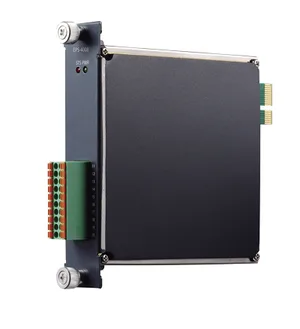 EPS-4008
- **Eight single‑ended analog output channels** supporting ±10 V range. - **High‑speed performance:** 100 kS/s sampling rate per channel. - **High precision:** 16‑bit resolution with ±0.2 mV offset error and ±0.05 % FSR gain error. - **Loopback circuitry** for onboard output signal integrity monitoring. - **Hot‑swappable module** design allows replacement without system power‑down. - **Wide operating temperature range:** −20 °C to +60 °C for industrial environments. - **Compact mechanical form factor:** 100 mm (L) × 100 mm (H). - **IEC 61131 compliance** ensuring compatibility with industrial control standards. - **Integrated self‑diagnostics** for module temperature and health monitoring. - **Quick‑removable Phoenix Contact DFMC connector** for simplified wiring and maintenance. - **Full EtherCAT compatibility** with ADLINK’s EPS‑6000 bus coupler and third‑party EtherCAT masters. - **Comprehensive protection:** ±24 V over‑voltage protection with relay‑off safety state on fault. - **Low power consumption:**
Manufacturer: No category
Category: Modules
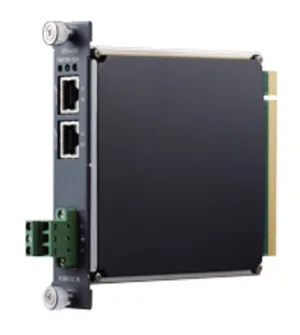 EPS-6000
- **EtherCAT Protocol Support:** Fully supports EtherCAT COE (CANopen over EtherCAT), FOE (File over EtherCAT), and AOE (ADS over EtherCAT) protocols. - **High Compatibility:** Operates seamlessly with certified third-party EtherCAT masters, including ADLINK’s Talos controllers. - **Comprehensive Module Support:** Interfaces with up to four EPS peripheral modules, including digital I/O, analog I/O, thermal measurement, and motion control modules. - **Automatic Detection System (ADS):** Integrated with ADLINK’s LinkMasterPro™ configurator for automatic module recognition and ESI (EtherCAT Slave Information) file generation. - **Hot-Swappable Design:** Modules can be replaced without powering down the system, minimizing Mean Time to Repair (MTTR). - **Wide Operating Temperature Range:** Reliable operation from -20°C to +60°C for industrial environments. - **Rugged Construction:** Designed for vibration (5 Grms, 5–500 Hz) and shock (50G, 11 ms half-sine) resistance. - **Compact Form Factor:** 130 mm (L) × 110 mm (W) × 105 mm (H),
Manufacturer: No category
Category: Modules
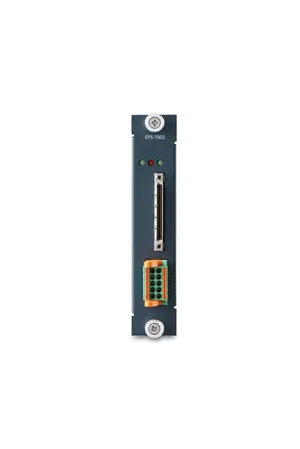 EPS-7002
- **Dual‑Channel Pulse‑Train Motion Control:** Two independent pulse‑train output channels for precise motion control of servo or stepper drives. - **High‑Speed Pulse Output:** Supports pulse frequencies up to **4 MHz**, enabling high‑resolution and high‑speed motion profiles. - **Encoder Feedback Support:** Two encoder input channels with **20 MHz** maximum input frequency (at 4×AB mode), supporting **TTL incremental encoders** for position and velocity feedback. - **Flexible Output Modes:** Configurable **CW/CCW** (clockwise/counter‑clockwise) and **OUT/DIR** (pulse/direction) output modes for compatibility with a wide range of servo and stepper drives. - **Comprehensive Motion and Servo I/O:** Includes dedicated motion I/O (PEL, MEL, ORG) and servo I/O (ALM, INP, RDY, SVON, ERC, RST) interfaces for complete axis control and status monitoring. - **Industrial‑Grade Design:** - Operating temperature: **–20 °C to +60 °C** - Isolation: **2 kV DC** (channel‑to‑DGND and channel‑to‑chassis) - Power consumption: **
Manufacturer: No category
Category: Modules
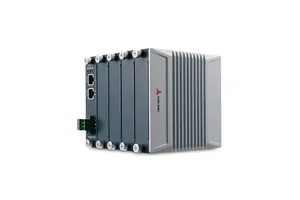 EPS-9905+EPS-6000
- **EtherCAT Compatibility:** Fully compatible with certified third-party EtherCAT masters and ADLINK’s Talos controllers. - **Protocol Support:** Supports EtherCAT CoE (CANopen over EtherCAT), FoE (File over EtherCAT), and AoE (ADS over EtherCAT) protocols. - **Comprehensive I/O Modules:** Supports a wide range of high-density digital I/O, analog I/O, thermal measurement, and motion control modules. - **Automatic Detection System (ADS):** Integrated with ADLINK’s LinkMasterPro™ configurator for automatic module recognition and ESI file generation. - **Hot-Swappable Modules:** Enables module replacement without system shutdown, minimizing Mean Time to Repair (MTTR). - **Intelligent Monitoring:** Real-time monitoring of module status, relay lifecycle, analog signal integrity, and system temperature. - **Wide Operating Temperature:** Reliable operation from -20°C to +60°C. - **Rugged Construction:** IP31 protection, vibration resistance (5 Grms, 5–500 Hz), and shock tolerance (50G, 11 ms half-sine). - **Compact Design:** 130 mm (L) × 110 mm (W) × 105 mm (H),
Manufacturer: No category
Category: Modules