 LOOKING FOR THE RIGHT
INDUSTRIAL SOLUTION?
Discover embedded, communication and automation solutions tailored to your application.
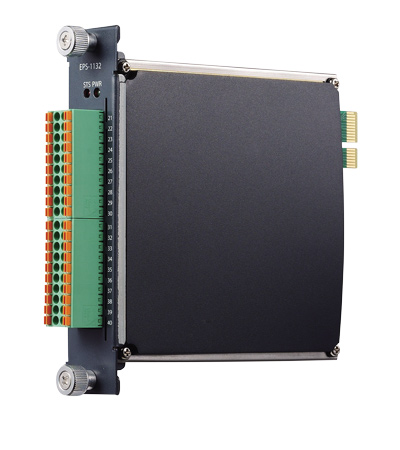
- 32‑Channel Sinking Digital Outputs: Provides 32 individually addressable sinking‑type digital output channels for high‑density control applications.
- Wide Operating Temperature Range: Reliable operation from ‑20°C to +60°C, suitable for harsh industrial environments.
- Compact Form Factor: Space‑efficient design measuring 100 mm (L) × 100 mm (H) for high‑density installations.
- Hot‑Swappable Design: Modules can be replaced without powering down the system, minimizing downtime and maintenance effort.
- Quick‑Removable Connector: Equipped with a Phoenix Contact DFMC series connector for simplified wiring and maintenance.
- High Isolation Protection: 2 kV DC isolation between channels and chassis/ground ensures electrical safety and signal integrity.
- Self‑Diagnostic Functions: Monitors power, communication, and watchdog timer (WDT) status for enhanced reliability.
- IEC‑61131 Compliance: Meets industrial control standards for digital I/O modules.
- EtherCAT Compatibility: Fully interoperable with certified third‑party EtherCAT masters and ADLINK’s Talos controllers.
- Rugged Construction: Designed for vibration, shock, and EMC compliance per EN 60068‑2 and EN 61000‑6 standards.
- Intelligent Monitoring: FPGA and ARM‑based architecture enables real‑time monitoring of module health, temperature, and usage cycles.
- Wide Operating Temperature Range: Reliable operation from ‑20°C to +60°C, suitable for harsh industrial environments.
- Compact Form Factor: Space‑efficient design measuring 100 mm (L) × 100 mm (H) for high‑density installations.
- Hot‑Swappable Design: Modules can be replaced without powering down the system, minimizing downtime and maintenance effort.
- Quick‑Removable Connector: Equipped with a Phoenix Contact DFMC series connector for simplified wiring and maintenance.
- High Isolation Protection: 2 kV DC isolation between channels and chassis/ground ensures electrical safety and signal integrity.
- Self‑Diagnostic Functions: Monitors power, communication, and watchdog timer (WDT) status for enhanced reliability.
- IEC‑61131 Compliance: Meets industrial control standards for digital I/O modules.
- EtherCAT Compatibility: Fully interoperable with certified third‑party EtherCAT masters and ADLINK’s Talos controllers.
- Rugged Construction: Designed for vibration, shock, and EMC compliance per EN 60068‑2 and EN 61000‑6 standards.
- Intelligent Monitoring: FPGA and ARM‑based architecture enables real‑time monitoring of module health, temperature, and usage cycles.
Comprehensive Product Summary – ADLINK EPS‑2132 32‑Channel Sinking Type Digital Output EtherCAT Module
### 1. Product Overview
Product Name: EPS‑2132
Model Number: EPS‑2132
Series: ADLINK EPS Series EtherCAT Slave System
Article Number: EPS‑2132
Manufacturer: ADLINK Technology, Inc.
Part Number (Manual Reference): 50‑17043‑1000
Manual Revision: 2.00 (Released October 2, 2015)
The ADLINK EPS‑2132 is a high‑density, 32‑channel sinking‑type digital output module designed for EtherCAT‑based distributed control systems. It is part of ADLINK’s modular EPS Series, which provides flexible, rugged, and intelligent I/O expansion for industrial automation, motion control, and smart factory applications. The EPS‑2132 integrates seamlessly with ADLINK’s EtherCAT ecosystem and is fully compatible with third‑party EtherCAT masters.
### 2. Key Features
- 32‑Channel Sinking Digital Outputs: Provides 32 individually addressable sinking‑type digital output channels for high‑density control applications.
- Wide Operating Temperature Range: Reliable operation from ‑20°C to +60°C, suitable for harsh industrial environments.
- Compact Form Factor: Space‑efficient design measuring 100 mm (L) × 100 mm (H) for high‑density installations.
- Hot‑Swappable Design: Modules can be replaced without powering down the system, minimizing downtime and maintenance effort.
- Quick‑Removable Connector: Equipped with a Phoenix Contact DFMC series connector for simplified wiring and maintenance.
- High Isolation Protection: 2 kV DC isolation between channels and chassis/ground ensures electrical safety and signal integrity.
- Self‑Diagnostic Functions: Monitors power, communication, and watchdog timer (WDT) status for enhanced reliability.
- IEC‑61131 Compliance: Meets industrial control standards for digital I/O modules.
- EtherCAT Compatibility: Fully interoperable with certified third‑party EtherCAT masters and ADLINK’s Talos controllers.
- Rugged Construction: Designed for vibration, shock, and EMC compliance per EN 60068‑2 and EN 61000‑6 standards.
- Intelligent Monitoring: FPGA and ARM‑based architecture enables real‑time monitoring of module health, temperature, and usage cycles.
### 3. Technical Specifications
| Parameter | Specification |
|----------------|-------------------|
| Channels | 32 digital output channels |
| Output Type | Sinking |
| EVCC Input Voltage | 12 VDC to 24 VDC ±10% |
| Output Impedance (Rout) | 250 Ω |
| Output Current (Iout) | 300 mA per channel; 800 mA per 4‑channel group |
| Output Voltage (Vout) | Iout × Rout |
| Response Time | 4 kHz |
| Power Consumption (from chassis) | < 450 mW (max.) |
| Thermal Dissipation (at max temp.) | < 2.55 W @ EVCC = 24 V +10% |
| Isolation (Channel‑to‑DGND) | 2 kV DC |
| Isolation (Channel‑to‑Chassis) | 2 kV DC |
| Operating Temperature | ‑20°C to +60°C |
| Storage Temperature | ‑40°C to +85°C |
| Dimensions | 100 mm (L) × 100 mm (H) |
| Connector Type | Phoenix Contact DFMC series, 2×20‑pin, 3.5 mm pitch |
| Wire Gauge | AWG 16–24 |
| Hot Swap Support | Yes |
| Power On State | Off |
| Self‑Diagnostics | Power, Communication, Watchdog Timer |
| Compliance | IEC‑61131, EN 60068‑2, EN 61000‑6 |
| Weight | Approx. 200–250 g (module only) |
### 4. Functionality
The EPS‑2132 functions as a sinking‑type digital output module within an EtherCAT network. It receives control signals from an EtherCAT master (such as ADLINK’s Talos controller or any certified third‑party master) and drives external loads by sinking current to ground. Each of the 32 channels can independently control actuators, relays, solenoids, or indicator lamps.
Operating Principle:
- The module’s outputs switch the connection between the load and ground (sinking configuration).
- When a channel is activated, current flows from the external power supply through the load into the module’s output transistor to ground.
- The module’s internal circuitry ensures fast switching (up to 4 kHz) and stable operation under varying load conditions.
Use Cases and Applications:
- Industrial automation and process control
- Machine tool and robotics control
- Packaging and assembly line automation
- Distributed I/O in EtherCAT networks
- Smart factory and IIoT systems
- Motor drive control and relay actuation
Compatibility:
- Fully compatible with ADLINK EtherCAT systems and third‑party EtherCAT masters.
- Configurable via ADLINK LinkMasterPro™ utility for automatic ESI file generation and system integration.
- Supports EtherCAT CoE (CANopen over EtherCAT) and FoE (File over EtherCAT) protocols.
### 5. Components & Accessories
Included Components:
- EPS‑2132 module
- Quick‑removable Phoenix Contact DFMC connector (2×20‑pin)
- User documentation and quick start guide
Optional Accessories:
- EPS‑9905 chassis (mainframe with DIN rail kit)
- EPS‑6000 EtherCAT bus coupler module
- External 24 VDC power supply (9–30 VDC input range)
- LinkMasterPro™ configuration software (Windows utility)
- DIN rail mounting hardware and filler plates
Connectors and Pin Assignments:
| Pin | Signal | Pin | Signal |
|----------|-------------|----------|-------------|
| 1 | EGND | 21 | EGND |
| 2 | CH00 | 22 | CH01 |
| 3 | CH02 | 23 | CH03 |
| 4 | CH04 | 24 | CH05 |
| 5 | CH06 | 25 | CH07 |
| 6 | CH08 | 26 | CH09 |
| 7 | CH10 | 27 | CH11 |
| 8 | CH12 | 28 | CH13 |
| 9 | CH14 | 29 | CH15 |
| 10 | EVCC | 30 | EVCC |
| 11 | EGND | 31 | EGND |
| 12 | CH16 | 32 | CH17 |
| 13 | CH18 | 33 | CH19 |
| 14 | CH20 | 34 | CH21 |
| 15 | CH22 | 35 | CH23 |
| 16 | CH24 | 36 | CH25 |
| 17 | CH26 | 37 | CH27 |
| 18 | CH28 | 38 | CH29 |
| 19 | CH30 | 39 | CH31 |
| 20 | EVCC | 40 | EVCC |
### 6. Installation & Setup
System Requirements:
- EPS‑9905 chassis or compatible EPS Series frame
- EPS‑6000 EtherCAT bus coupler module
- 24 VDC power supply (±10%)
- EtherCAT master controller (ADLINK Talos or equivalent)
- CAT5/CAT5e Ethernet cables for EtherCAT communication
Mounting Options:
- DIN rail mounting (default)
- Rack mounting with optional accessories
Installation Steps:
1. Power Off: Ensure the system is powered down before installation.
2. Slot Selection: Choose an available peripheral slot in the EPS chassis.
3. Module Insertion: Align the module with the slot guide and slide it in until fully seated.
4. Secure Module: Fasten the front panel screws.
5. Connect Wiring: Attach the Phoenix Contact connector and wire outputs according to the pin assignment.
6. Power Up: Apply 24 VDC power to the chassis.
7. Configuration: Use LinkMasterPro™ to scan and register the module, generating the corresponding ESI file for the EtherCAT master.
Hot‑Swap Procedure:
Modules can be replaced while the system remains powered. The EtherCAT network automatically detects the new module and reconfigures communication parameters.
Cooling Considerations:
Maintain at least 5 cm clearance above and 2.5 cm on each side of the chassis for adequate heat dissipation. Internal temperature sensors monitor thermal conditions and report to the host system.
### 7. Performance & Capabilities
- Switching Frequency: Up to 4 kHz, enabling rapid digital control.
- Output Drive Capability: 300 mA per channel, 800 mA per 4‑channel group, suitable for medium‑power loads.
- Electrical Isolation: 2 kV DC isolation ensures protection against ground loops and transient surges.
- Power Efficiency: Low power consumption (<450 mW) minimizes system heat generation.
- Reliability: FPGA‑based control logic ensures deterministic timing and consistent output response.
- Hot‑Swap and Auto‑Detection: Reduces mean time to repair (MTTR) and simplifies maintenance.
- Limitations:
- No built‑in short‑circuit protection; external fusing recommended.
- Reverse voltage protection not included.
- Designed for DC loads only (12–24 VDC).
### 8. Standards & Compliance
Electrical and Environmental Standards:
- IEC‑61131‑2: Compliance for industrial digital I/O modules.
- EN 60068‑2‑6: Vibration resistance (5 Grms, 5–500 Hz, 3 axes).
- EN 60068‑2‑27: Shock resistance (100 G, 11 ms half‑sine).
- EN 61000‑6: EMC protection for heavy industrial environments.
- CE and FCC Class A: Electromagnetic compatibility certification.
- UL and CB Safety Certification: Ensures compliance with international safety standards.
Environmental Compliance:
- RoHS Directive: Restriction of Hazardous Substances compliant.
- WEEE Directive: Waste Electrical and Electronic Equipment compliant.
- Operating Environment: Designed for industrial temperature range (‑20°C to +60°C) and non‑condensing humidity conditions.
EtherCAT Protocol Compliance:
- Supports CoE (CANopen over EtherCAT) and FoE (File over EtherCAT).
- Compatible with CiA402 motion control profile when used with motion modules.
- ESI (EtherCAT Slave Information) files generated automatically via LinkMasterPro™ utility.
### 9. Additional Information
Warranty:
Standard ADLINK limited warranty (typically 2 years; refer to regional policy). Covers defects in materials and workmanship under normal use.
Technical Support & Service:
ADLINK provides global technical support through regional offices in Taiwan, USA, China, Europe, Japan, Korea, Singapore, and India.
- Email: service@adlinktech.com
- Website: [www.adlinktech.com](https://www.adlinktech.com)
Maintenance:
- Periodically inspect connectors and wiring for wear or corrosion.
- Ensure adequate ventilation and clean dust from chassis vents.
- Use only ADLINK‑approved replacement parts and accessories.
Software & Firmware Updates:
- Managed via LinkMasterPro™ utility using FoE (File over EtherCAT).
- Firmware updates can be downloaded to the module EEPROM without removing it from the system.
- ESI files can be regenerated automatically after firmware updates.
Safety Precautions:
- Disconnect power before wiring or maintenance.
- Avoid exposure to moisture, vibration, or excessive heat.
- Use proper grounding and shielding to prevent electrical noise.
- Only qualified personnel should install or service the module.
Environmental Responsibility:
ADLINK enforces strict environmental management policies to minimize ecological impact. Customers are encouraged to dispose of end‑of‑life products through certified recycling programs.
### Summary
The ADLINK EPS‑2132 is a robust, high‑density 32‑channel sinking digital output EtherCAT module engineered for industrial automation and distributed control systems. It combines rugged hardware design, intelligent diagnostics, and seamless EtherCAT integration in a compact, hot‑swappable form factor. With wide temperature tolerance, 2 kV isolation, and compliance with IEC and EN industrial standards, the EPS‑2132 delivers reliable performance in demanding environments such as smart factories, robotics, and process automation.
Its compatibility with ADLINK’s LinkMasterPro™ configuration software and third‑party EtherCAT masters ensures flexible deployment across diverse automation architectures. The EPS‑2132 exemplifies ADLINK’s commitment to modular, scalable, and environmentally responsible industrial I/O solutions.
### 1. Product Overview
Product Name: EPS‑2132
Model Number: EPS‑2132
Series: ADLINK EPS Series EtherCAT Slave System
Article Number: EPS‑2132
Manufacturer: ADLINK Technology, Inc.
Part Number (Manual Reference): 50‑17043‑1000
Manual Revision: 2.00 (Released October 2, 2015)
The ADLINK EPS‑2132 is a high‑density, 32‑channel sinking‑type digital output module designed for EtherCAT‑based distributed control systems. It is part of ADLINK’s modular EPS Series, which provides flexible, rugged, and intelligent I/O expansion for industrial automation, motion control, and smart factory applications. The EPS‑2132 integrates seamlessly with ADLINK’s EtherCAT ecosystem and is fully compatible with third‑party EtherCAT masters.
### 2. Key Features
- 32‑Channel Sinking Digital Outputs: Provides 32 individually addressable sinking‑type digital output channels for high‑density control applications.
- Wide Operating Temperature Range: Reliable operation from ‑20°C to +60°C, suitable for harsh industrial environments.
- Compact Form Factor: Space‑efficient design measuring 100 mm (L) × 100 mm (H) for high‑density installations.
- Hot‑Swappable Design: Modules can be replaced without powering down the system, minimizing downtime and maintenance effort.
- Quick‑Removable Connector: Equipped with a Phoenix Contact DFMC series connector for simplified wiring and maintenance.
- High Isolation Protection: 2 kV DC isolation between channels and chassis/ground ensures electrical safety and signal integrity.
- Self‑Diagnostic Functions: Monitors power, communication, and watchdog timer (WDT) status for enhanced reliability.
- IEC‑61131 Compliance: Meets industrial control standards for digital I/O modules.
- EtherCAT Compatibility: Fully interoperable with certified third‑party EtherCAT masters and ADLINK’s Talos controllers.
- Rugged Construction: Designed for vibration, shock, and EMC compliance per EN 60068‑2 and EN 61000‑6 standards.
- Intelligent Monitoring: FPGA and ARM‑based architecture enables real‑time monitoring of module health, temperature, and usage cycles.
### 3. Technical Specifications
| Parameter | Specification |
|----------------|-------------------|
| Channels | 32 digital output channels |
| Output Type | Sinking |
| EVCC Input Voltage | 12 VDC to 24 VDC ±10% |
| Output Impedance (Rout) | 250 Ω |
| Output Current (Iout) | 300 mA per channel; 800 mA per 4‑channel group |
| Output Voltage (Vout) | Iout × Rout |
| Response Time | 4 kHz |
| Power Consumption (from chassis) | < 450 mW (max.) |
| Thermal Dissipation (at max temp.) | < 2.55 W @ EVCC = 24 V +10% |
| Isolation (Channel‑to‑DGND) | 2 kV DC |
| Isolation (Channel‑to‑Chassis) | 2 kV DC |
| Operating Temperature | ‑20°C to +60°C |
| Storage Temperature | ‑40°C to +85°C |
| Dimensions | 100 mm (L) × 100 mm (H) |
| Connector Type | Phoenix Contact DFMC series, 2×20‑pin, 3.5 mm pitch |
| Wire Gauge | AWG 16–24 |
| Hot Swap Support | Yes |
| Power On State | Off |
| Self‑Diagnostics | Power, Communication, Watchdog Timer |
| Compliance | IEC‑61131, EN 60068‑2, EN 61000‑6 |
| Weight | Approx. 200–250 g (module only) |
### 4. Functionality
The EPS‑2132 functions as a sinking‑type digital output module within an EtherCAT network. It receives control signals from an EtherCAT master (such as ADLINK’s Talos controller or any certified third‑party master) and drives external loads by sinking current to ground. Each of the 32 channels can independently control actuators, relays, solenoids, or indicator lamps.
Operating Principle:
- The module’s outputs switch the connection between the load and ground (sinking configuration).
- When a channel is activated, current flows from the external power supply through the load into the module’s output transistor to ground.
- The module’s internal circuitry ensures fast switching (up to 4 kHz) and stable operation under varying load conditions.
Use Cases and Applications:
- Industrial automation and process control
- Machine tool and robotics control
- Packaging and assembly line automation
- Distributed I/O in EtherCAT networks
- Smart factory and IIoT systems
- Motor drive control and relay actuation
Compatibility:
- Fully compatible with ADLINK EtherCAT systems and third‑party EtherCAT masters.
- Configurable via ADLINK LinkMasterPro™ utility for automatic ESI file generation and system integration.
- Supports EtherCAT CoE (CANopen over EtherCAT) and FoE (File over EtherCAT) protocols.
### 5. Components & Accessories
Included Components:
- EPS‑2132 module
- Quick‑removable Phoenix Contact DFMC connector (2×20‑pin)
- User documentation and quick start guide
Optional Accessories:
- EPS‑9905 chassis (mainframe with DIN rail kit)
- EPS‑6000 EtherCAT bus coupler module
- External 24 VDC power supply (9–30 VDC input range)
- LinkMasterPro™ configuration software (Windows utility)
- DIN rail mounting hardware and filler plates
Connectors and Pin Assignments:
| Pin | Signal | Pin | Signal |
|----------|-------------|----------|-------------|
| 1 | EGND | 21 | EGND |
| 2 | CH00 | 22 | CH01 |
| 3 | CH02 | 23 | CH03 |
| 4 | CH04 | 24 | CH05 |
| 5 | CH06 | 25 | CH07 |
| 6 | CH08 | 26 | CH09 |
| 7 | CH10 | 27 | CH11 |
| 8 | CH12 | 28 | CH13 |
| 9 | CH14 | 29 | CH15 |
| 10 | EVCC | 30 | EVCC |
| 11 | EGND | 31 | EGND |
| 12 | CH16 | 32 | CH17 |
| 13 | CH18 | 33 | CH19 |
| 14 | CH20 | 34 | CH21 |
| 15 | CH22 | 35 | CH23 |
| 16 | CH24 | 36 | CH25 |
| 17 | CH26 | 37 | CH27 |
| 18 | CH28 | 38 | CH29 |
| 19 | CH30 | 39 | CH31 |
| 20 | EVCC | 40 | EVCC |
### 6. Installation & Setup
System Requirements:
- EPS‑9905 chassis or compatible EPS Series frame
- EPS‑6000 EtherCAT bus coupler module
- 24 VDC power supply (±10%)
- EtherCAT master controller (ADLINK Talos or equivalent)
- CAT5/CAT5e Ethernet cables for EtherCAT communication
Mounting Options:
- DIN rail mounting (default)
- Rack mounting with optional accessories
Installation Steps:
1. Power Off: Ensure the system is powered down before installation.
2. Slot Selection: Choose an available peripheral slot in the EPS chassis.
3. Module Insertion: Align the module with the slot guide and slide it in until fully seated.
4. Secure Module: Fasten the front panel screws.
5. Connect Wiring: Attach the Phoenix Contact connector and wire outputs according to the pin assignment.
6. Power Up: Apply 24 VDC power to the chassis.
7. Configuration: Use LinkMasterPro™ to scan and register the module, generating the corresponding ESI file for the EtherCAT master.
Hot‑Swap Procedure:
Modules can be replaced while the system remains powered. The EtherCAT network automatically detects the new module and reconfigures communication parameters.
Cooling Considerations:
Maintain at least 5 cm clearance above and 2.5 cm on each side of the chassis for adequate heat dissipation. Internal temperature sensors monitor thermal conditions and report to the host system.
### 7. Performance & Capabilities
- Switching Frequency: Up to 4 kHz, enabling rapid digital control.
- Output Drive Capability: 300 mA per channel, 800 mA per 4‑channel group, suitable for medium‑power loads.
- Electrical Isolation: 2 kV DC isolation ensures protection against ground loops and transient surges.
- Power Efficiency: Low power consumption (<450 mW) minimizes system heat generation.
- Reliability: FPGA‑based control logic ensures deterministic timing and consistent output response.
- Hot‑Swap and Auto‑Detection: Reduces mean time to repair (MTTR) and simplifies maintenance.
- Limitations:
- No built‑in short‑circuit protection; external fusing recommended.
- Reverse voltage protection not included.
- Designed for DC loads only (12–24 VDC).
### 8. Standards & Compliance
Electrical and Environmental Standards:
- IEC‑61131‑2: Compliance for industrial digital I/O modules.
- EN 60068‑2‑6: Vibration resistance (5 Grms, 5–500 Hz, 3 axes).
- EN 60068‑2‑27: Shock resistance (100 G, 11 ms half‑sine).
- EN 61000‑6: EMC protection for heavy industrial environments.
- CE and FCC Class A: Electromagnetic compatibility certification.
- UL and CB Safety Certification: Ensures compliance with international safety standards.
Environmental Compliance:
- RoHS Directive: Restriction of Hazardous Substances compliant.
- WEEE Directive: Waste Electrical and Electronic Equipment compliant.
- Operating Environment: Designed for industrial temperature range (‑20°C to +60°C) and non‑condensing humidity conditions.
EtherCAT Protocol Compliance:
- Supports CoE (CANopen over EtherCAT) and FoE (File over EtherCAT).
- Compatible with CiA402 motion control profile when used with motion modules.
- ESI (EtherCAT Slave Information) files generated automatically via LinkMasterPro™ utility.
### 9. Additional Information
Warranty:
Standard ADLINK limited warranty (typically 2 years; refer to regional policy). Covers defects in materials and workmanship under normal use.
Technical Support & Service:
ADLINK provides global technical support through regional offices in Taiwan, USA, China, Europe, Japan, Korea, Singapore, and India.
- Email: service@adlinktech.com
- Website: [www.adlinktech.com](https://www.adlinktech.com)
Maintenance:
- Periodically inspect connectors and wiring for wear or corrosion.
- Ensure adequate ventilation and clean dust from chassis vents.
- Use only ADLINK‑approved replacement parts and accessories.
Software & Firmware Updates:
- Managed via LinkMasterPro™ utility using FoE (File over EtherCAT).
- Firmware updates can be downloaded to the module EEPROM without removing it from the system.
- ESI files can be regenerated automatically after firmware updates.
Safety Precautions:
- Disconnect power before wiring or maintenance.
- Avoid exposure to moisture, vibration, or excessive heat.
- Use proper grounding and shielding to prevent electrical noise.
- Only qualified personnel should install or service the module.
Environmental Responsibility:
ADLINK enforces strict environmental management policies to minimize ecological impact. Customers are encouraged to dispose of end‑of‑life products through certified recycling programs.
### Summary
The ADLINK EPS‑2132 is a robust, high‑density 32‑channel sinking digital output EtherCAT module engineered for industrial automation and distributed control systems. It combines rugged hardware design, intelligent diagnostics, and seamless EtherCAT integration in a compact, hot‑swappable form factor. With wide temperature tolerance, 2 kV isolation, and compliance with IEC and EN industrial standards, the EPS‑2132 delivers reliable performance in demanding environments such as smart factories, robotics, and process automation.
Its compatibility with ADLINK’s LinkMasterPro™ configuration software and third‑party EtherCAT masters ensures flexible deployment across diverse automation architectures. The EPS‑2132 exemplifies ADLINK’s commitment to modular, scalable, and environmentally responsible industrial I/O solutions.
-
 EPS-2132_Datasheet_en_1.pdf
PDF Catalog
EPS-2132_Datasheet_en_1.pdf
PDF Catalog

No accessories available.