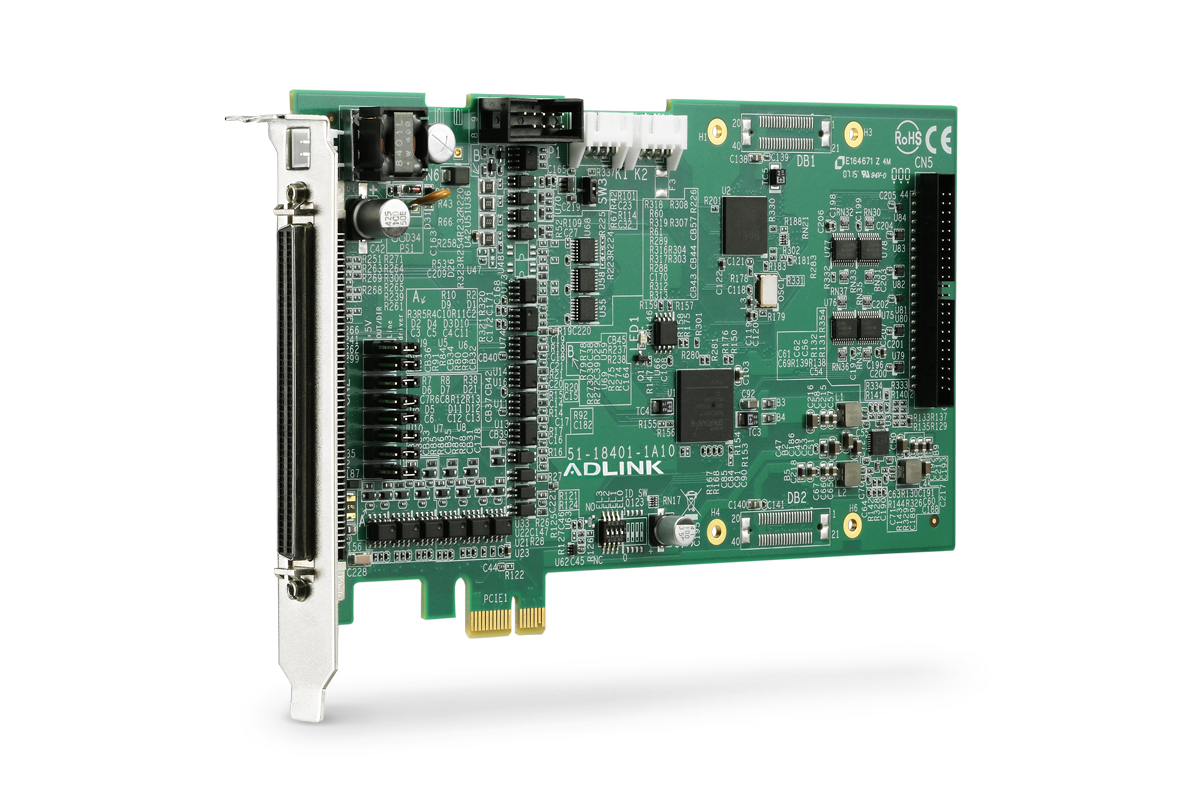
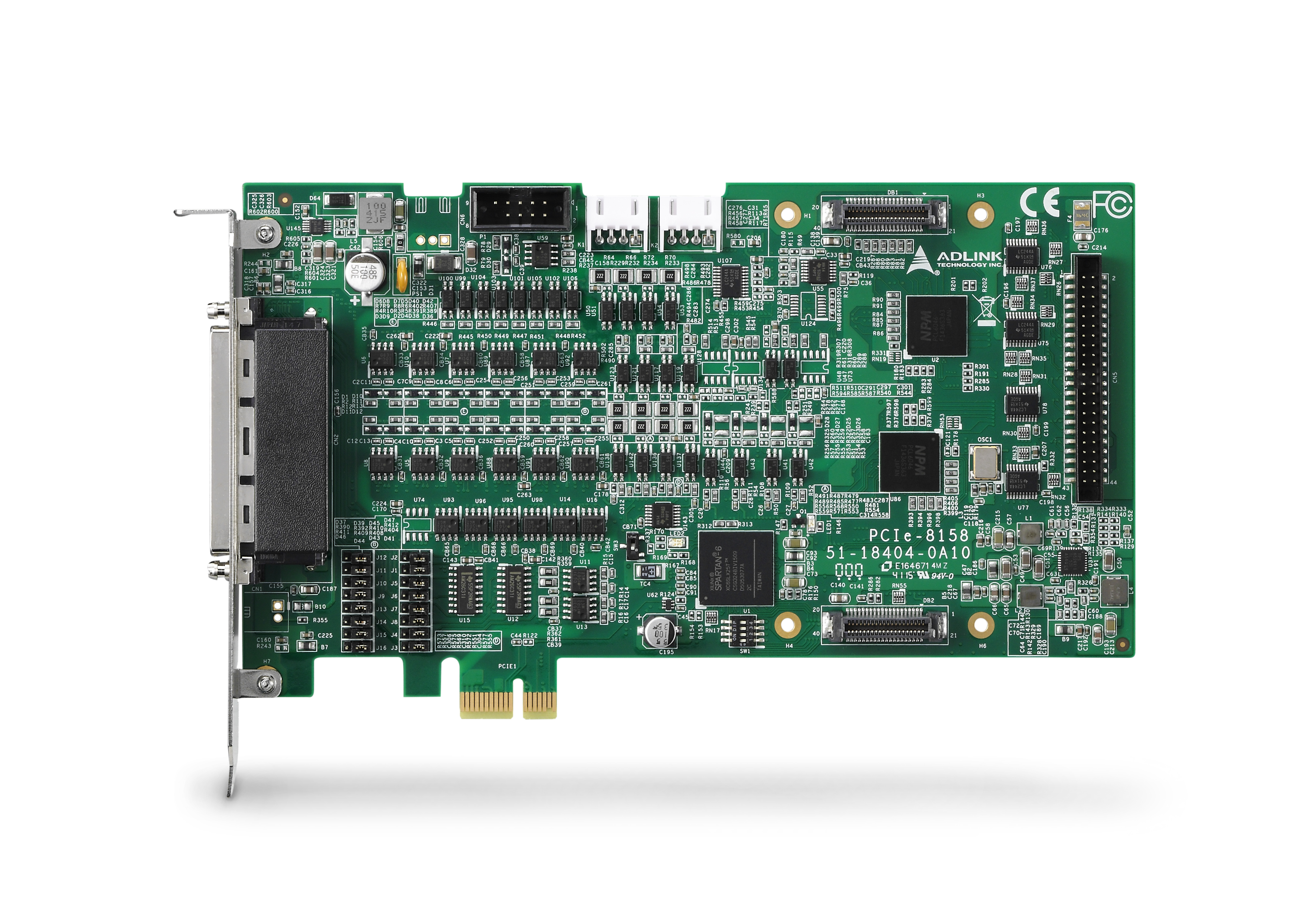
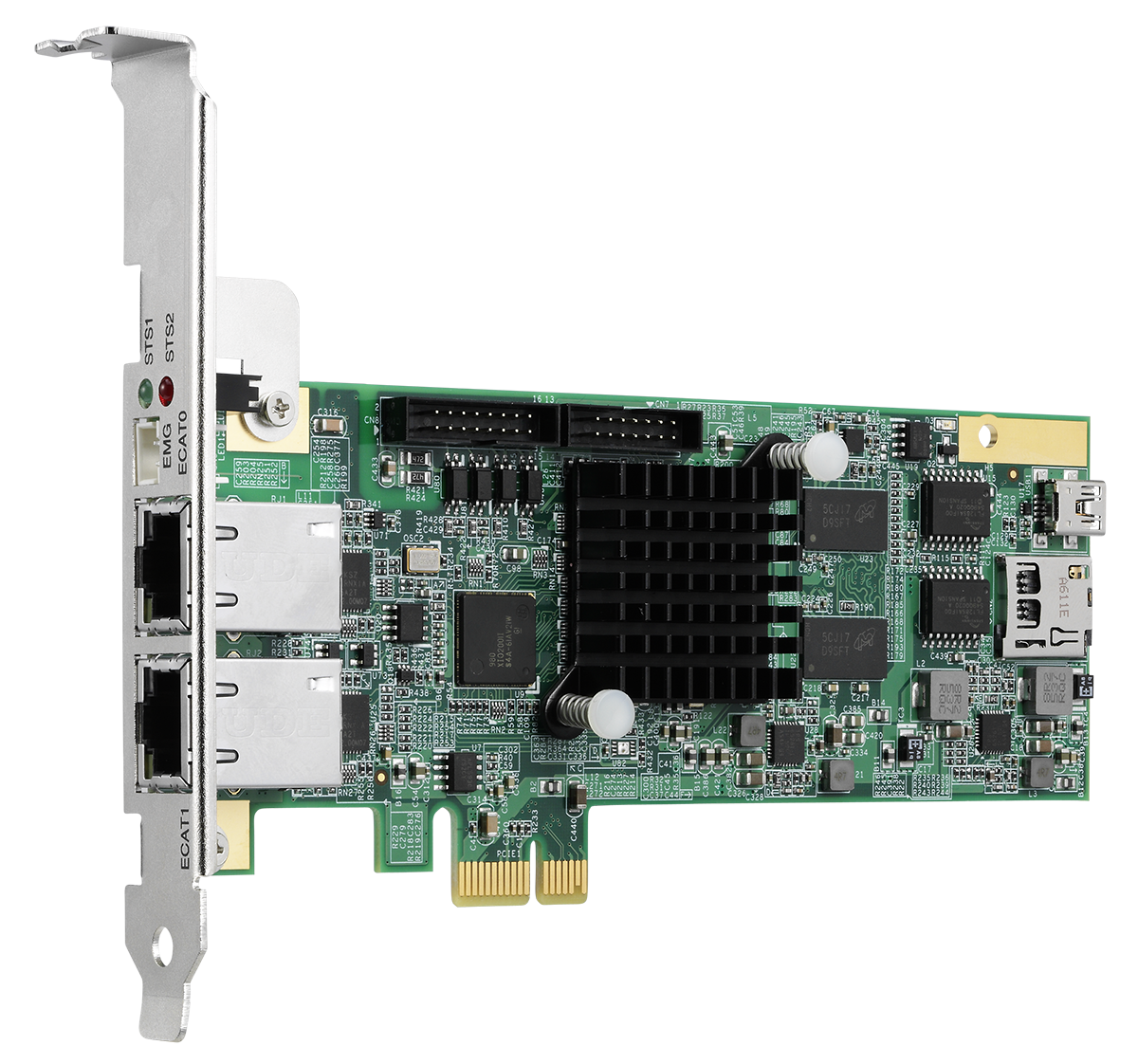
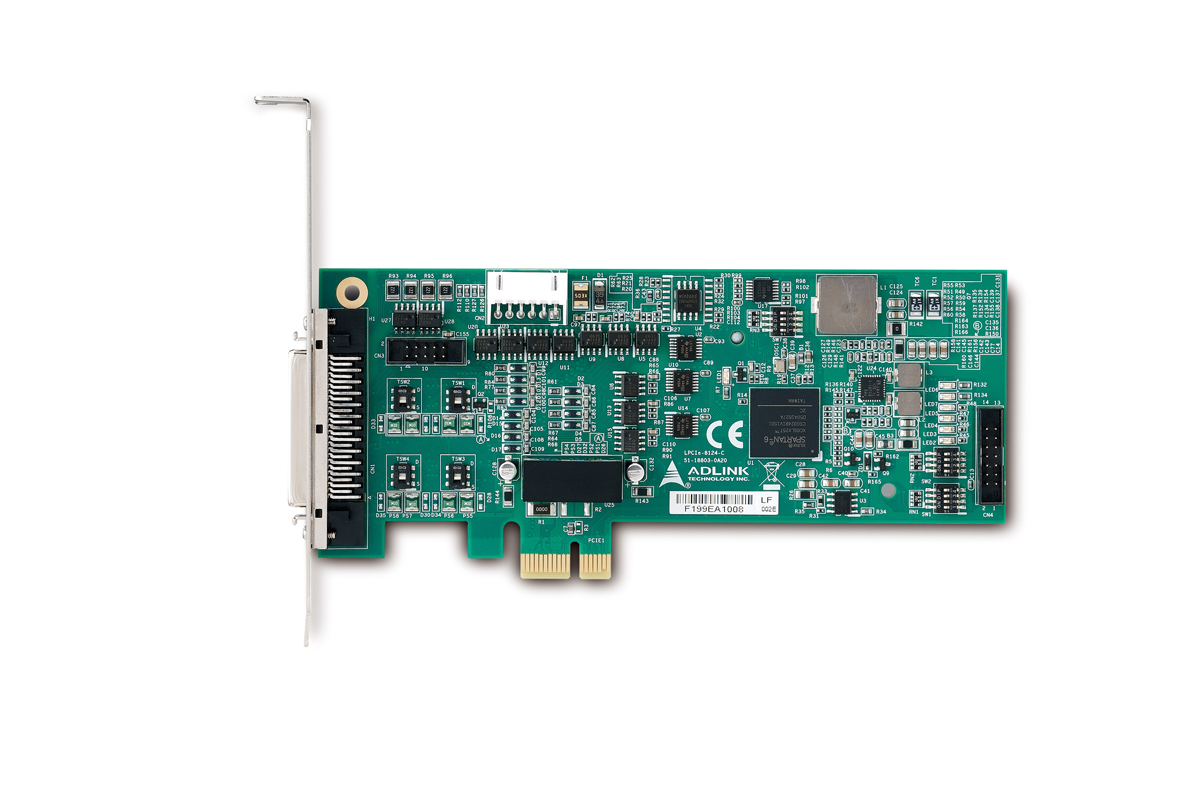
Comprehensive Product Summary – ADLINK LPCIe‑8124‑C Advanced 4‑Channel Encoder Motion Card
### 1. Product Overview
Product Name: LPCIe‑8124‑C
Model: LPCIe‑8124‑C
Series: LPCIe Series Encoder and Motion Control Cards
Article Number: LPCIe‑8124‑C
Manufacturer: ADLINK Technology Inc.
Product Type: Advanced 4‑Channel Encoder Counter and High‑Speed Trigger Output PCI Express Card
Form Factor: Low‑Profile PCI Express (PCIe) Bus Card
Manufacturer Website: [www.adlinktech.com](http://www.adlinktech.com)
The ADLINK LPCIe‑8124‑C is a high‑performance, low‑profile PCI Express encoder counter and trigger output card designed for precision motion control, position comparison, and high‑speed triggering applications. It provides four differential quadrature encoder input channels and four high‑speed trigger outputs, supporting multiple encoder modes and flexible triggering configurations. The card is optimized for industrial automation, AOI (Automated Optical Inspection), and distance measurement systems requiring precise synchronization between motion and image acquisition.
### 2. Key Features
- Four 32‑bit Quadrature Encoder Channels: Each channel supports 1×, 2×, or 4× A/B phase decoding, CW/CCW, and OUT/DIR pulse modes.
- High‑Speed Encoder Input: Up to 18 MHz input frequency in 4× A/B mode ensures accurate position tracking for high‑speed motion systems.
- High‑Speed Trigger Output: Four independent trigger outputs capable of up to 4.4 MHz output frequency.
- Programmable Trigger Pulse Width: Adjustable from 0.1 µs to 3.2765 ms for flexible timing control.
- Multiple Output Interfaces: TTL output, 5–24 V open‑collector output, and differential output interfaces for broad device compatibility.
- 14 Built‑in 32‑bit Comparators: Enable complex position comparison and multi‑trigger mapping functions.
- FIFO and Linear Comparison Modes: 1,023‑point FIFO per channel and 10 linear comparison functions for continuous or patterned triggering.
- Optical Isolation: 2,500 VRMS isolation for selected I/O signals ensures noise immunity and system protection.
- Flexible Trigger Modes: Manual, linear, table, and timer‑based triggering supported.
- Software Tools: Includes ADLINK’s TriggerMaster configuration utility and comprehensive Windows driver and API library.
- Board Index Switch: Hardware switch for unique board identification in multi‑card systems (up to 16 cards).
- Low‑Profile PCIe Design: Compact 151 mm × 67 mm PCB suitable for space‑constrained industrial PCs.
### 3. Technical Specifications
Counter and Trigger Performance
- Number of Encoder Channels: 4
- Counter Resolution: 32‑bit per channel
- Encoder Input Frequency: Up to 18 MHz (4× A/B mode)
- Trigger Output Frequency: Up to 4.4 MHz
- Trigger Pulse Width: 0.1 µs – 3.2765 ms (programmable)
- Comparator Count: 14 × 32‑bit comparators
- FIFO Capacity: 1,023 points per channel
- Linear Functions: 10 independent sets
- Timer Base: 400 ns, 14‑bit resolution
- Timer Interval: (Interval × 16 + 4) × 25 ns
- PWM Modes: Pulse or toggle output selectable
Electrical and Mechanical
- Connector Type: 50‑pin SCSI‑II type
- Dimensions: 151 mm (L) × 67 mm (W) (low‑profile)
- Power Consumption:
- Slot Power Input: +5 V DC ± 5%, 900 mA (max)
- External Power Output: +5 V DC ± 5%, 500 mA (max)
- Isolation Voltage: 2,500 VRMS (optically isolated I/O)
- Operating Temperature: 0 °C – +50 °C (32 °F – 122 °F)
- Storage Temperature: −20 °C – +80 °C (−4 °F – 176 °F)
- Humidity: 5 % – 85 %, non‑condensing
Materials and Build
- Industrial‑grade PCB with high‑reliability components
- Optical isolators: PS9115 photo‑couplers
- FPGA Core: ACTEL A3P1000, 40 MHz reference clock
### 4. Functionality
The LPCIe‑8124‑C functions as a high‑precision encoder counter and trigger generator for motion control and inspection systems. It receives differential quadrature encoder signals (A, B, Z) from motion axes or linear scales, counts position data, and generates synchronized trigger pulses based on programmable position comparisons.
Supported Encoder Modes:
- OUT/DIR (Single Pulse Mode): EA counts pulses, EB defines direction.
- CW/CCW (Dual Pulse Mode): EA counts up (CW), EB counts down (CCW).
- A/B Phase Mode: 1×, 2×, 4× decoding for incremental encoders.
Triggering Functions:
- Position Comparison: Generates trigger when encoder count equals preset comparator value.
- FIFO Mode: Sequentially compares up to 1,023 preset positions for continuous triggering.
- Linear Mode: Automatically increments comparison points by fixed intervals for periodic triggers.
- Manual Trigger: Software‑initiated pulse generation.
- Timer‑Based Trigger: Uses internal timers or external TTL inputs for time‑based pulse output.
Applications:
- Automated Optical Inspection (AOI)
- Line‑scan camera synchronization
- Precision distance measurement
- Motion‑synchronized image capture
- Semiconductor inspection and metrology
- Industrial automation and robotics
Compatibility:
- PCI Express interface compatible with standard x1/x4/x8/x16 slots.
- Supported operating systems: Windows 7, Windows 8.1, RTX 8.1a/2009 SMP.
- Programming environments: VB, VC++, BCB with sample source code.
### 5. Components & Accessories
Included Components:
- LPCIe‑8124‑C encoder card
- ADLINK All‑in‑One software CD (drivers, libraries, documentation)
- User manual and installation guide
Optional Accessories:
- DIN‑50S‑01: Terminal board with one 50‑pin SCSI‑II connector and DIN‑rail mounting.
- ACL‑10250‑1: 50‑pin SCSI‑II cable (1 m, mating with AMP‑787082‑5).
Connectors and Signals:
- Encoder Inputs: EA±, EB±, EZ± for each of four channels.
- Latch Inputs: LTC1–LTC4 with INCOM1–INCOM4 commons.
- Trigger Outputs: TRG1–TRG4 with OUTCOM references.
- TTL I/O: Four TTL inputs (TTL‑IN1–4) and four TTL outputs (TTL‑OUT1–4).
- Ground: DGND for TTL reference.
### 6. Installation & Setup
System Requirements:
- Available PCI Express slot (x1 or higher)
- Windows 7/8.1 or RTX 8.1a/2009 SMP environment
- Administrator privileges for driver installation
Installation Steps:
1. Power off the host PC and remove the cover.
2. Insert the LPCIe‑8124‑C into an available PCIe slot.
3. Secure the card and reconnect system power.
4. Install ADLINK’s All‑in‑One driver package from the included CD or website.
5. Configure board index (SW1) for unique identification (0–15).
6. Set default trigger output level (SW2) as required (+5 V or 0 V).
7. Connect encoders, latch inputs, and trigger outputs via the 50‑pin SCSI connector.
8. Verify installation in Windows Device Manager and test using TriggerMaster utility.
Mounting Options:
- Standard PCIe bracket or low‑profile bracket (depending on chassis).
- Optional DIN‑rail terminal board for field wiring.
Configuration Tools:
- TriggerMaster: Windows‑based GUI for configuration, testing, and trigger management.
- DLL/API Library: For custom application development in C/C++/VB.
### 7. Performance & Capabilities
Speed and Throughput:
- Encoder input up to 18 MHz ensures accurate position tracking even in high‑speed motion systems.
- Trigger output up to 4.4 MHz supports high‑frequency synchronization with cameras or actuators.
- FIFO and linear comparison enable continuous triggering without CPU intervention.
Capacity and Efficiency:
- 32‑bit counters and comparators provide large dynamic range for long‑travel motion systems.
- 1,023‑point FIFO per channel allows pre‑loading of complex trigger sequences.
- 10 linear functions enable repetitive or patterned trigger generation.
- FPGA‑based architecture offloads processing from the host CPU, improving system efficiency.
Limitations:
- Operating temperature limited to 0 °C – 50 °C; requires adequate ventilation.
- TTL I/O not optically isolated; external protection recommended in noisy environments.
- Maximum of 16 boards per system (64 channels total).
### 8. Standards & Compliance
- Bus Interface: PCI Express (LPCIe) compliant
- Isolation: 2,500 VRMS optical isolation on selected I/O
- Electrical Safety: Designed for industrial control environments
- Environmental: 5 %–85 % RH, non‑condensing
- RoHS Compliance: Yes (lead‑free manufacturing)
- Quality Assurance: Manufactured under ISO 9001 certified processes
- Firmware/Driver Standards: Windows WDM driver model
### 9. Additional Information
Software Support:
- Operating Systems: Windows 7, Windows 8.1, RTX 8.1a/2009 SMP
- Programming Languages: Visual Basic, Visual C++, Borland C++ Builder
- Development Tools: DLL and API libraries, sample code, and TriggerMaster GUI
Maintenance & Updates:
- Firmware and driver updates available via ADLINK website.
- Regular software revisions ensure compatibility with new OS versions.
Warranty:
- Standard Warranty: Two years (one year for products sold in China).
- Coverage: Manufacturing defects and hardware failures under normal use.
- Exclusions: Damage from misuse, improper installation, environmental factors, or unauthorized repair.
- RMA Procedure: Obtain RMA form from [rma.adlinktech.com/policy](http://rma.adlinktech.com/policy) before returning products.
Technical Support:
- Email: service@adlinktech.com
- Phone: +886‑2‑82265877
- Fax: +886‑2‑82265717
- Address: 9F, No. 166, Jian Yi Road, Chungho City, Taipei 235, Taiwan
Manufacturer’s Note:
All specifications are subject to change without notice to improve reliability and performance. Product names and trademarks are the property of their respective owners.
### Summary
The ADLINK LPCIe‑8124‑C is a robust, high‑precision encoder and trigger card engineered for demanding industrial and inspection applications. Its combination of four 32‑bit encoder counters, high‑speed trigger outputs, and FPGA‑based processing enables precise synchronization between motion and measurement devices. With flexible encoder modes, programmable trigger logic, and comprehensive software support, it integrates seamlessly into AOI, metrology, and automation systems requiring microsecond‑level timing accuracy. The card’s optical isolation, low‑profile PCIe design, and multi‑board scalability make it a versatile solution for OEMs and system integrators seeking reliable, high‑speed motion feedback and triggering performance.


 LOOKING FOR THE RIGHT
 LPCIe-8124-C_Datasheet_en_20180209_v1.pdf
PDF Catalog
LPCIe-8124-C_Datasheet_en_20180209_v1.pdf
PDF Catalog
 PCI-8124_Manual_5.pdf
Manual
PCI-8124_Manual_5.pdf
Manual