Comprehensive Product Summary: ADLINK LPCI-7230 Low-Profile Isolated Digital I/O Card
### 1. Product Overview
Product Name: LPCI-7230
Model: LPCI-7230
Series: PCI-/cPCI-/LPCI-/LPCIe-723X Series (32-Channel Isolated Digital I/O Cards)
Article Number: LPCI-7230
Manufacturer: ADLINK Technology Inc.
Website: [www.adlinktech.com](http://www.adlinktech.com)
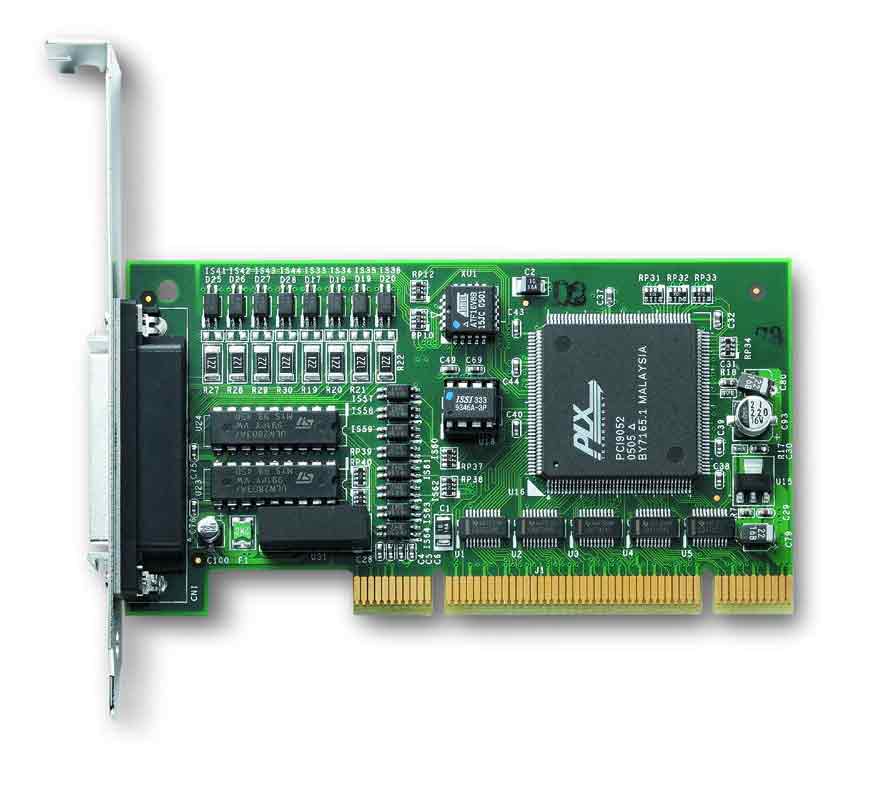
The ADLINK LPCI-7230 is a low-profile isolated digital input/output (DIO) card designed for industrial automation, control, and monitoring applications. It belongs to ADLINK’s 723X series of isolated DIO cards, which includes PCI, CompactPCI, low-profile PCI, and PCI Express variants. The LPCI-7230 provides 16 isolated digital input channels and 16 isolated digital output channels, offering robust electrical isolation and high reliability for interfacing with external industrial devices.
### 2. Key Features
- Bus Interface: 32-bit 3.3 V or 5 V PCI bus (low-profile PCI form factor).
- Channel Configuration: 16 isolated digital inputs and 16 isolated digital outputs.
- Isolation Protection: 2500 V RMS optical isolation between channels and host system.
- Output Type: Darlington transistor open-collector outputs supporting up to 35 VDC.
- Input Range: Non-polarity 0–24 VDC input range with 1.2 kΩ input resistance.
- Output Drive Capability:
- Sink current up to 500 mA per channel at 100% duty cycle.
- 370 mA for all channels at 10% duty cycle.
- 130 mA for all channels at 50% duty cycle.
- Throughput Rate: 10 kHz for both input and output operations.
- Interrupt Support: Two external interrupt sources on digital input channels (channel 0 and 1).
- Connector Type: One 50-pin SCSI-II female connector for I/O interface.
- Compact Design: Low-profile PCI form factor (120 mm × 65 mm).
- Software Compatibility: Supports Windows and Linux operating systems with comprehensive driver and SDK support.
- Recommended Software: AD-Logger, DAQBench, DAQPilot, and third-party integration with LabVIEW™ and MATLAB®.
- Operating Temperature Range: 0°C to 60°C.
- Storage Temperature Range: -20°C to 80°C.
- Humidity Tolerance: 5% to 95% non-condensing.
### 3. Technical Specifications
Form Factor: Low-profile PCI card
Bus Type: 32-bit PCI, 3.3 V or 5 V signaling
Dimensions: 120 mm (L) × 65 mm (H)
Weight: Approximately 100–150 g (typical for low-profile PCI cards)
Connector: 50-pin SCSI-II female connector
Power Requirements: +5 V @ 150 mA typical
Isolation Voltage: 2500 V RMS optical isolation
Input Resistance: 1.2 kΩ ±5%, 0.5 W
Input Voltage Range: 0–24 VDC (non-polarity)
Input Logic Levels:
- Logic Low: 0–1.5 V
- Logic High: 5–24 V
Output Voltage Range: 5–35 VDC (open collector)
Output Type: Darlington transistor (sink current)
Output Current Capability:
- 500 mA max per channel @ 100% duty cycle
- 370 mA for all channels @ 10% duty cycle
- 130 mA for all channels @ 50% duty cycle
Throughput: 10 kHz (input/output)
Isolation Type: Optical isolation between channels and system bus
Operating Temperature: 0°C to 60°C
Storage Temperature: -20°C to 80°C
Relative Humidity: 5%–95%, non-condensing
Power Dissipation: Max. 1.47 W per chip (8 DO channels)
External Power Supply (VDD): 5–35 VDC for output circuits
### 4. Functionality
The LPCI-7230 provides electrically isolated digital input and output channels for interfacing with external industrial devices such as sensors, relays, solenoids, and actuators. Each input channel can detect voltage levels up to 24 VDC, while each output channel can drive loads up to 35 VDC using open-collector Darlington transistors.
Operation Principle:
- Digital Inputs: Each input channel is optically isolated from the system bus, preventing ground loops and protecting the host PC from voltage transients. The non-polarity design allows flexible wiring without concern for signal polarity.
- Digital Outputs: The outputs use Darlington transistor arrays capable of sinking up to 500 mA per channel. External power (VDD) is required to drive the output loads. The open-collector configuration allows direct control of relays, lamps, or other DC loads.
- Interrupts: Two interrupt sources are available on input channels 0 and 1, enabling event-driven control and monitoring.
Typical Applications:
- Industrial automation and process control
- Machine status monitoring
- Relay and solenoid actuation
- Data acquisition and test systems
- PLC interfacing and SCADA systems
- Safety interlock and alarm systems
Compatibility:
- Compatible with ADLINK’s DAQPilot, PCIS-DASK, and DAQ-MTLB drivers.
- Supports integration with LabVIEW™, MATLAB®, and Visual Studio environments.
- Works with Windows 7/Vista/XP/2000/2003 Server and Linux distributions.
### 5. Components & Accessories
Included Items:
- LPCI-7230 low-profile PCI card
- ADLINK software CD (drivers, SDKs, utilities)
- User’s manual and installation guide
Optional Accessories:
- DIN-50S-01: Terminal board with one 50-pin SCSI-II connector and DIN-rail mounting.
- ACL-10250-1: 50-pin SCSI-II cable (1 meter, mating with AMP-787082-5).
- ACLD-9137-01: General-purpose terminal board with 37-pin D-sub male connector (for other 723X models).
- DIN-37D-01: Terminal board with 37-pin D-sub connector and DIN-rail mounting (for PCI-7230/7233/7234).
Connectors:
- One 50-pin SCSI-II female connector for isolated digital I/O signals.
- External VDD and EOGND terminals for output power supply and ground return.
### 6. Installation & Setup
System Requirements:
- Available 32-bit PCI slot (3.3 V or 5 V signaling)
- External DC power supply (5–35 VDC) for output circuits
- Compatible operating system (Windows or Linux)
Installation Procedure:
1. Power off the host computer and disconnect all peripherals.
2. Insert the LPCI-7230 card into an available PCI slot.
3. Secure the card with the mounting screw.
4. Connect the external I/O wiring to the 50-pin SCSI-II connector.
5. Supply external VDD (5–35 VDC) to the output power terminal.
6. Power on the system and install the ADLINK drivers.
7. Verify installation using ADLINK’s DAQMaster or DAQPilot utility.
Configuration:
- Plug-and-Play PCI configuration (no manual jumper settings).
- System BIOS automatically assigns base addresses and interrupts.
- Software utilities (DAQMaster) can be used to manage device configuration.
Mounting Options:
- Standard low-profile PCI bracket for compact PC enclosures.
- Optional DIN-rail terminal boards for industrial panel integration.
### 7. Performance & Capabilities
Input Performance:
- Input voltage tolerance up to 24 VDC.
- Non-polarity input design simplifies wiring.
- Optical isolation ensures noise immunity and system protection.
- Input throughput up to 10 kHz for fast signal detection.
Output Performance:
- Darlington transistor outputs provide high current sinking capability.
- Supports inductive loads (relays, solenoids) with fly-wheel diode protection.
- Output voltage range 5–35 VDC.
- Output throughput up to 10 kHz.
Electrical Isolation:
- 2500 V RMS optical isolation between channels and host system.
- Prevents ground loops and protects against transient voltages.
Efficiency & Reliability:
- Low power consumption (+5 V @ 150 mA typical).
- High durability for continuous industrial operation.
- Designed for 24/7 operation in harsh environments.
Limitations:
- Requires external DC power for output operation.
- Limited to 10 kHz throughput (not suitable for high-speed digital switching).
- Sink-only output type (no source output capability).
### 8. Standards & Compliance
Bus Compliance:
- PCI Local Bus Specification Rev. 2.1 compliant.
- Supports 32-bit PCI signaling at 3.3 V or 5 V.
Form Factor Compliance:
- Low-profile PCI mechanical specification.
- Compatible with standard and low-profile PCI slots.
Isolation & Safety:
- Optical isolation: 2500 V RMS (LPCI-7230).
- Meets industrial-grade isolation and EMC protection standards.
Environmental Compliance:
- Operating temperature: 0°C to 60°C.
- Storage temperature: -20°C to 80°C.
- Humidity: 5%–95%, non-condensing.
Regulatory Compliance:
- CE and FCC compliant (typical for ADLINK industrial I/O products).
- RoHS compliant manufacturing process.
### 9. Additional Information
Warranty:
- Standard ADLINK limited warranty (typically 2 years).
- Covers manufacturing defects and hardware failures under normal use.
Technical Support:
- Global support via ADLINK Technology Inc.
- Email: service@adlinktech.com
- Phone: +886-2-82265877
- Fax: +886-2-82265717
- Address: 9F, No. 166, Jian Yi Road, Chungho City, Taipei 235, Taiwan
Maintenance:
- Periodic inspection of connectors and cables recommended.
- Ensure proper grounding and isolation for long-term reliability.
- Firmware and driver updates available from ADLINK’s website.
Software & Driver Updates:
- Windows Drivers: DAQPilot (recommended), PCIS-DASK (legacy).
- Linux Drivers: PCIS-DASK/X for Linux kernel integration.
- Third-Party Integration:
- DAQ-MTLB for MATLAB® Data Acquisition Toolbox.
- DAQ-LVIEW PnP for LabVIEW™.
- PCIS-VEE for Agilent VEE™.
- Utilities:
- DAQMaster: Configuration-based device manager.
- DAQBench: ActiveX control package for SCADA/HMI.
- DAQCreator: Data acquisition and logging software.
Maintenance Notes:
- Avoid electrostatic discharge during handling.
- Use anti-static wristbands and mats during installation.
- Do not exceed rated voltage or current limits.
- Ensure external power supply is properly regulated and grounded.
### Summary
The ADLINK LPCI-7230 is a robust, low-profile isolated digital I/O card engineered for industrial automation and control systems requiring reliable electrical isolation and flexible digital interfacing. With 16 isolated digital inputs and 16 isolated digital outputs, 2500 V RMS optical isolation, and high current drive capability, it provides a secure and efficient interface between industrial equipment and host computers. Its compatibility with multiple operating systems, extensive software support, and compact design make it ideal for embedded control, data acquisition, and machine automation applications.
The LPCI-7230 exemplifies ADLINK’s commitment to industrial-grade reliability, offering a balance of performance, protection, and ease of integration for engineers and system developers in manufacturing, testing, and process control environments.



 LOOKING FOR THE RIGHT
 Digital_IO_Selection_Guide_20151230.pdf
PDF Catalog
Digital_IO_Selection_Guide_20151230.pdf
PDF Catalog
 PCI-cPCI-LPCI-LPCIe-723X_Datasheet_en.pdf
PDF Catalog
PCI-cPCI-LPCI-LPCIe-723X_Datasheet_en.pdf
PDF Catalog